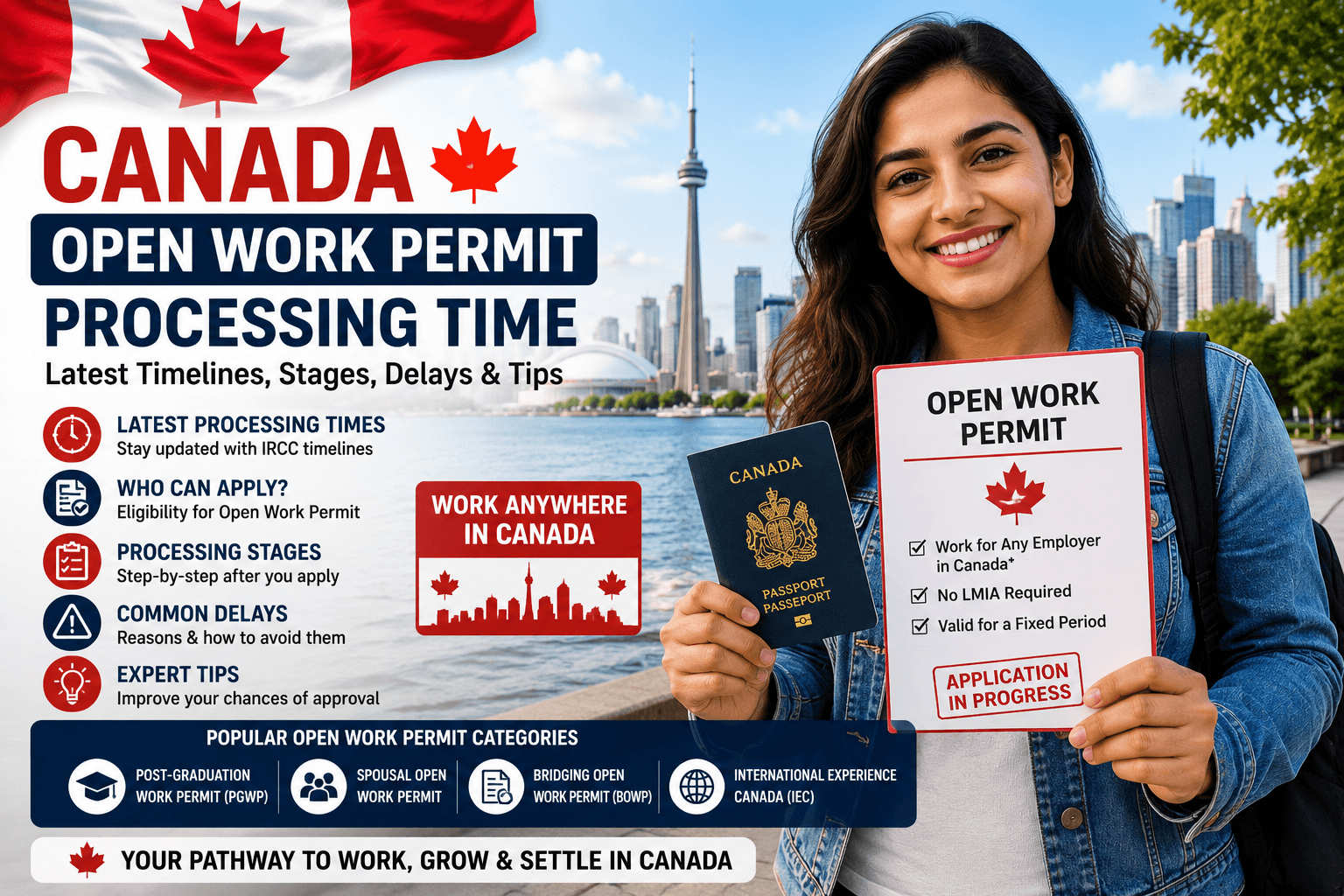
Canada’s Open Work Permit is one of the most flexible immigration documents available to temporary residents. Unlike employer-specific work permits, an open work permit allows eligible foreign nationals to work for most employers across Canada without first obtaining a specific job offer.
This flexibility makes it a popular option for spouses of international students and skilled workers, recent graduates, certain permanent residence applicants, and individuals who qualify under special immigration programs.


One of the first questions applicants ask is:
“How long does a Canada Open Work Permit take to process?”
The answer depends on several factors.
Immigration, Refugees and Citizenship Canada (IRCC) publishes estimated processing times, but these are only averages based on recently completed applications. The actual time required varies depending on your country of residence, the type of open work permit, application volume, biometrics, medical examinations, and background verification.
Understanding how the process works before submitting your application can help you avoid unnecessary delays and prepare a stronger application.
This guide explains the Canada Open Work Permit processing timeline, what happens after submission, common reasons for delays, and practical tips to improve your chances of a smooth approval.
What Is a Canada Open Work Permit?
An Open Work Permit allows eligible foreign nationals to work for almost any Canadian employer without being tied to a single company.
Unlike employer-specific work permits, applicants generally do not need:
- A Labour Market Impact Assessment (LMIA)
- A specific employer
- A fixed job offer before applying (depending on the program)
Because of this flexibility, open work permits are highly sought after by eligible applicants.
Who Can Apply for an Open Work Permit?
Eligibility depends on the immigration program.
Common applicants include:
- Spouses or common-law partners of eligible international students
- Spouses of eligible temporary foreign workers
- Post-Graduation Work Permit (PGWP) applicants
- Bridging Open Work Permit applicants
- Certain permanent residence applicants
- Participants in special public policies announced by IRCC
Each program has its own eligibility requirements.
Current Canada Open Work Permit Processing Time
Processing times vary depending on several factors, including:
- Country of residence
- Type of open work permit
- Current IRCC workload
- Biometrics
- Medical examination requirements
- Background verification
- Security screening
Because IRCC updates its processing estimates regularly, applicants should always check the official processing time tool before making travel or employment plans.
How Canada Open Work Permit Processing Works
Most applications follow a similar sequence.
Step 1: Submit Your Online Application
Create your IRCC account, complete the application, upload supporting documents, and pay the applicable fees.
Step 2: Complete Biometrics
If biometrics are required, IRCC will issue a Biometrics Instruction Letter.
You must visit an approved Visa Application Centre to provide:
- Fingerprints
- Digital photograph
Completing biometrics allows IRCC to continue processing your application but does not mean it has been approved.
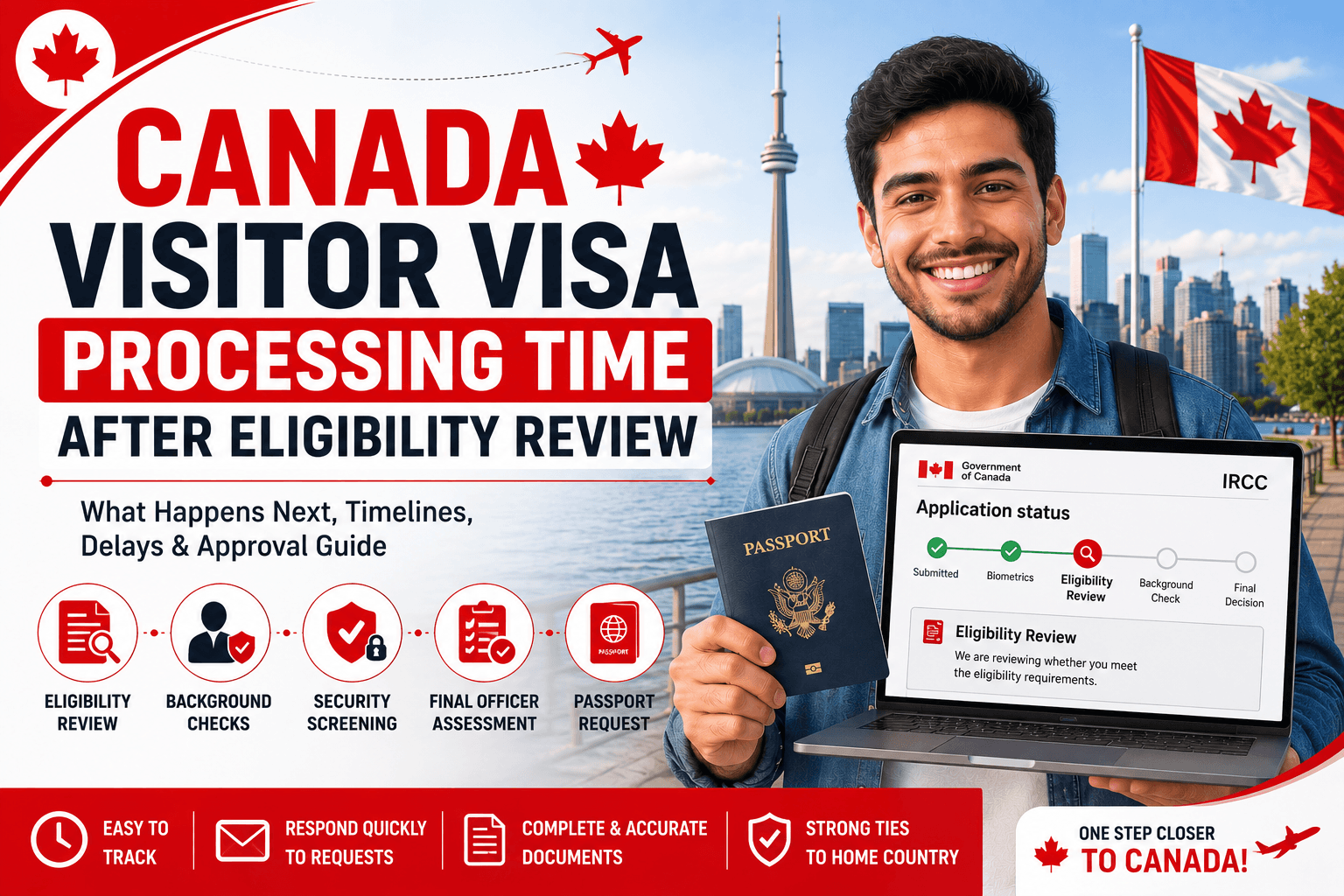
Step 3: Eligibility Assessment
An immigration officer reviews whether you qualify under the specific open work permit program.
They assess:
- Immigration status
- Supporting documents
- Eligibility under the selected program
- Identity documents
Step 4: Medical Examination Review
Some applicants must complete an immigration medical examination depending on:
- Country of residence
- Previous travel history
- Intended occupation in Canada
Medical examinations are common for applicants intending to work in healthcare, childcare, agriculture, and other designated occupations.
Step 5: Background Verification
IRCC reviews:
- Identity
- Immigration history
- Employment records
- Previous travel
- Supporting documentation
Step 6: Security Screening
Every applicant undergoes security screening before a final decision is made.
Applicants cannot influence this stage.
Step 7: Final Decision
Once every assessment has been completed, IRCC issues its final decision.
If approved, applicants receive instructions regarding the next steps depending on whether they applied inside or outside Canada.
Factors That Affect Canada Open Work Permit Processing Time
Every application is unique.
Several factors influence how long processing takes.
Country of Residence
Applications submitted from different countries may be processed by different visa offices with varying workloads.
Application Volume
Processing centres receive higher numbers of applications during certain periods of the year.
Medical Examination Requirements
Applications requiring medical examinations generally involve additional processing.
Background Verification
Applicants with straightforward immigration histories often experience smoother processing.
Additional Document Requests
Missing or unclear documents may require further review before a decision can be made.
Why Open Work Permits Are Different
Unlike employer-specific work permits, open work permits provide greater employment flexibility because they are generally not linked to one employer.
This means eligible holders can often change employers without applying for a new work permit, provided they continue to meet the conditions of their permit.
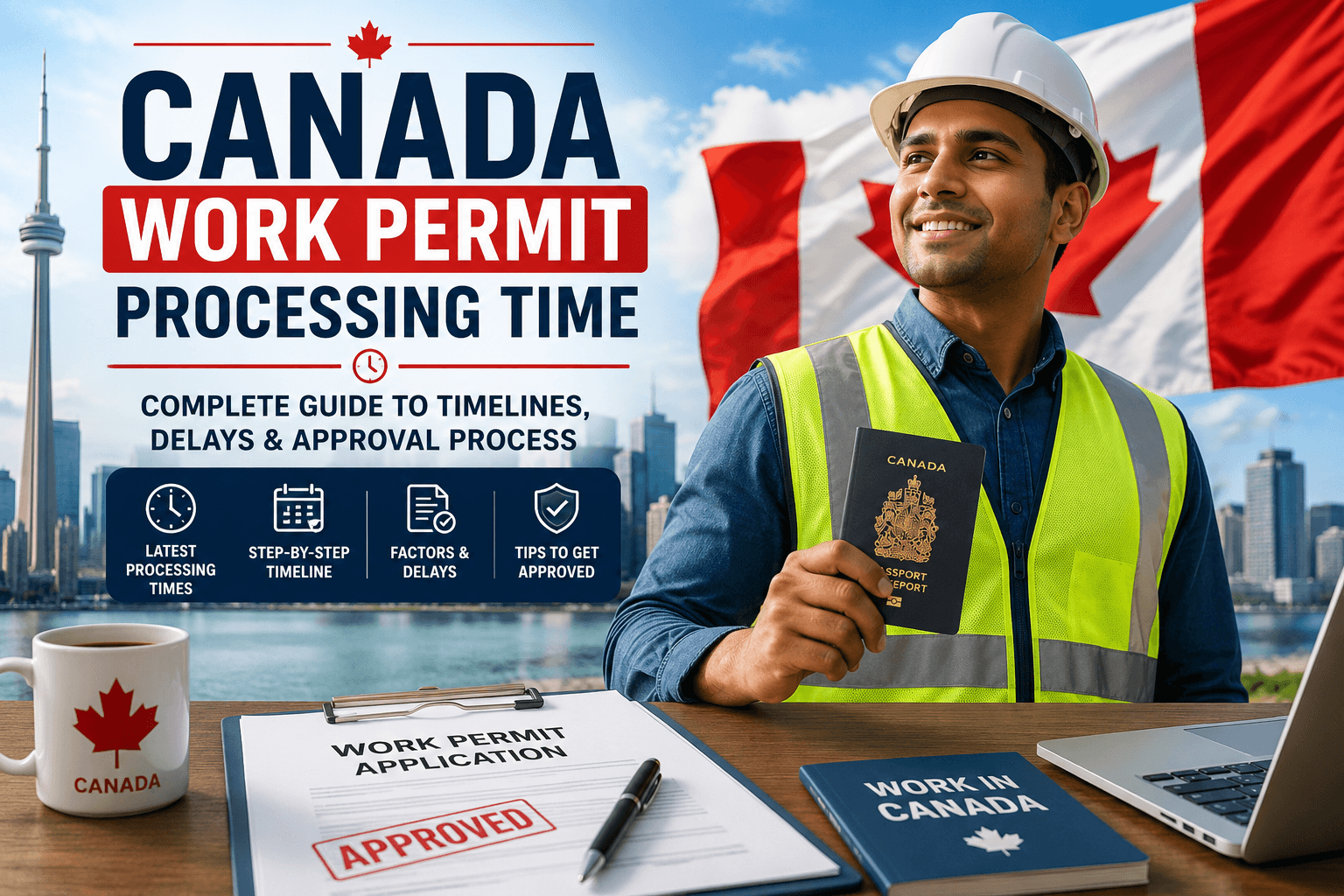
If you’re considering an employer-specific permit instead, our Canada Work Permit Processing Time guide explains how those applications differ and what to expect throughout the approval process.
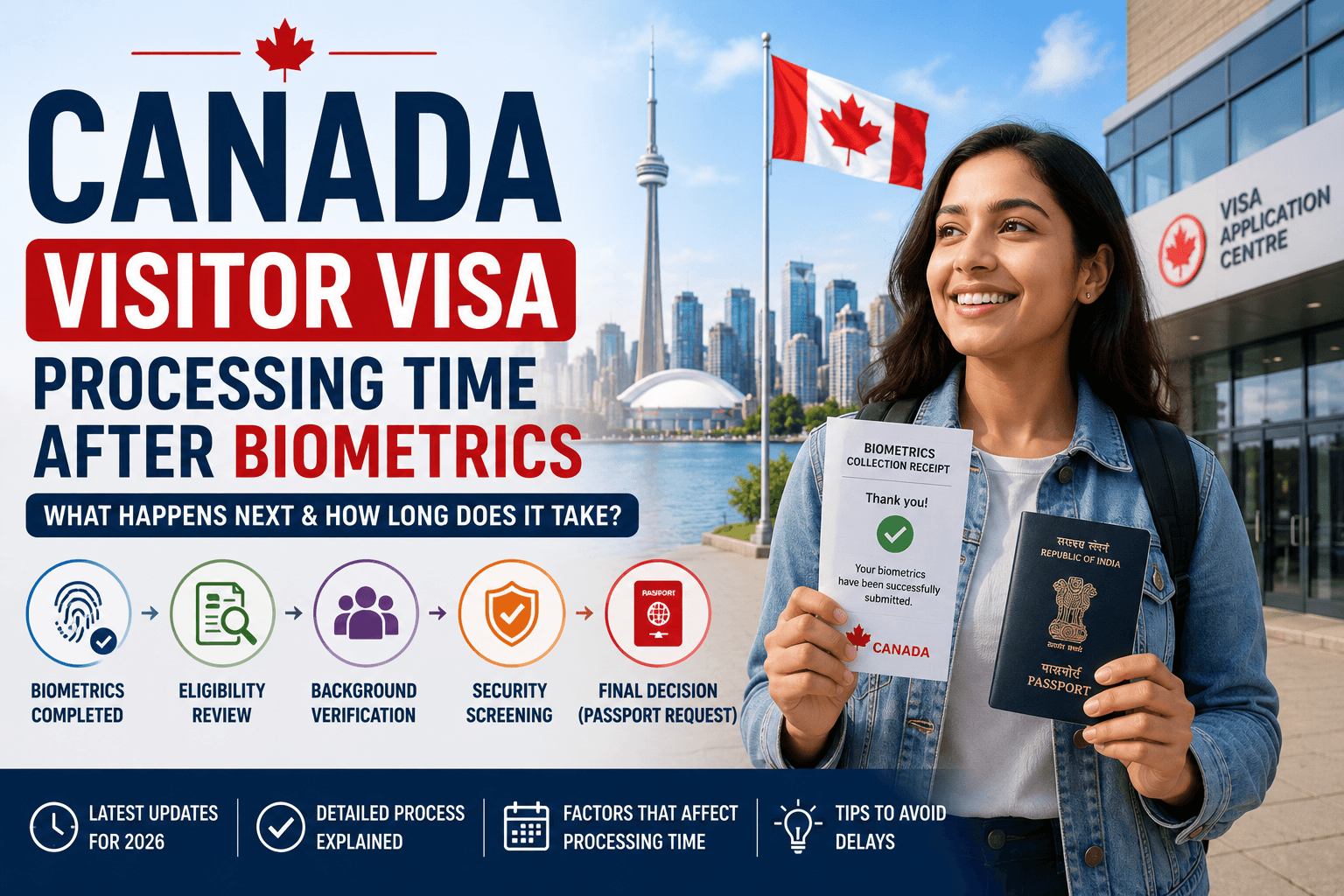
Canada Open Work Permit Processing Time After Biometrics
Completing your biometrics appointment is one of the final requirements before Immigration, Refugees and Citizenship Canada (IRCC) can continue processing your application.
Many applicants assume that once their fingerprints and photograph have been submitted, approval is only a few days away.
However, biometrics simply confirm your identity.
Several important assessments still take place before IRCC reaches a final decision.
After biometrics have been successfully received, your application usually moves through:
- Eligibility assessment
- Supporting document review
- Medical examination review (if required)
- Background verification
- Security screening
- Final officer review
- Decision
Every application progresses at its own pace, so two applicants who completed biometrics on the same day may receive decisions weeks apart.
If you’re interested in a detailed explanation of these stages, our Canada Work Permit Processing Time After Biometrics guide covers the post-biometric process in greater depth.
Why Is My Canada Open Work Permit Taking So Long?
Waiting for a decision can be frustrating, especially if you’re hoping to begin working in Canada as soon as possible.
Fortunately, longer processing times do not necessarily indicate a problem with your application.
Several legitimate factors can increase processing times.
High Application Volume
IRCC processes hundreds of thousands of temporary resident applications every year.
Open work permits often experience increased demand during:
- University graduation periods
- Seasonal immigration programs
- Family sponsorship initiatives
- Public policy announcements
Applications submitted during busy periods may take longer.
Medical Examination Review
Some applicants require immigration medical examinations.
Medical assessments are commonly required for applicants intending to work in:
- Healthcare
- Childcare
- Agriculture
- Other designated occupations
Applications requiring additional medical review generally take longer than those that do not.
Background Verification
IRCC reviews information relating to:
- Identity
- Previous immigration history
- Employment records
- Travel history
- Supporting documents
Straightforward applications usually progress more quickly.
Security Screening
Every applicant undergoes security screening before a work permit can be approved.
Applicants cannot speed up this stage.
Additional Document Requests
Sometimes IRCC requires more information before making a final decision.
Common requests include:
- Updated passport
- New immigration documents
- Additional proof of eligibility
- Updated medical information
- Additional identity documents
Processing generally pauses until the requested documents have been reviewed.
How to Avoid Canada Open Work Permit Processing Delays
Although some delays remain outside your control, careful preparation can improve your application.
Apply Early
Submit your application well before your intended start date whenever possible.
Applying early provides additional time if IRCC requests further documentation.
Submit Complete Documents
Before applying, ensure you’ve included every required document.
Depending on your program, these may include:
- Passport
- Marriage certificate (for spousal permits)
- Study permit or work permit of your spouse
- Letter of completion (for PGWP applicants)
- Educational documents
- Identity documents
Upload Clear Documents
Every uploaded document should be:
- Complete
- Easy to read
- Properly scanned
- Current
Poor-quality documents frequently result in additional requests.
Complete Medical Examinations Promptly
If a medical examination is required, complete it as soon as possible to avoid unnecessary delays later in processing.
Respond Quickly to IRCC Requests
If IRCC requests further information, upload the requested documents promptly.
Fast responses help keep your application moving.
How to Track Your Canada Open Work Permit Application
After submitting your application, you can monitor its progress through your online IRCC account.
Common status updates include:
- Application submitted
- Biometrics requested
- Biometrics completed
- Eligibility review
- Medical examination passed
- Background verification
- Final decision
It is perfectly normal for your application status to remain unchanged for several weeks while officers complete internal assessments.
Frequently Asked Questions
How long does a Canada Open Work Permit take?
Processing times vary depending on your country of residence, application volume, medical examinations, background checks, and the type of open work permit you are applying for.
Does biometrics mean my open work permit is approved?
No.
Biometrics only verify your identity.
IRCC must still complete eligibility assessment, medical review (if required), background verification, security screening, and the final officer review.
Why hasn’t my application changed after biometrics?
This is common.
Many applications remain under review for several weeks while IRCC completes internal assessments.
Can I speed up my open work permit application?
Generally, no.
Submitting a complete application with accurate documentation is the best way to reduce avoidable delays.
Can I work for any employer with an open work permit?
Most open work permits allow eligible holders to work for almost any employer in Canada.
However, some permits include conditions or restrictions depending on the immigration program.
What happens if my application is refused?
IRCC will issue a refusal letter explaining why your application was unsuccessful.
Depending on your circumstances, you may be able to submit a new application after addressing the issues identified.
Do I need a job offer?
Not always.
One of the main advantages of many open work permits is that they are not tied to a specific employer.
Eligibility depends on the particular immigration program under which you apply.
Can my spouse also receive an open work permit?
Certain spouses or common-law partners of eligible international students or skilled foreign workers may qualify for an open work permit if they meet the applicable immigration requirements.
Can I become a permanent resident later?
Yes.
Many open work permit holders later qualify for permanent residence through programs such as Express Entry or Provincial Nominee Programs. If permanent immigration is part of your long-term plan, our Canada PR Processing Time guide explains what happens after submitting a permanent residence application.
Is an open work permit better than an employer-specific work permit?
It depends on your circumstances.
An open work permit offers greater employment flexibility, while an employer-specific work permit is linked to a particular employer and job. Our Canada Work Permit Processing Time guide explains how employer-specific work permits are processed and how they differ from open work permits.
Final Thoughts
A Canada Open Work Permit offers exceptional flexibility, allowing many eligible foreign nationals to work for a wide range of employers without being tied to a single job. That flexibility makes it one of the most attractive temporary immigration options available.
Although processing times vary depending on your location, the type of open work permit, application volume, and individual circumstances, careful preparation can significantly reduce avoidable delays. Complete documentation, accurate information, and prompt responses to any IRCC requests all contribute to a smoother application process.
After biometrics, remember that several important stages still remain, including eligibility assessment, medical review (where required), background verification, security screening, and the final officer review. A period without updates is often normal and does not necessarily indicate a problem with your application.
By applying early, submitting a well-organized application, and monitoring your IRCC account regularly, you’ll give yourself the best possible chance of receiving your open work permit and beginning your employment journey in Canada.