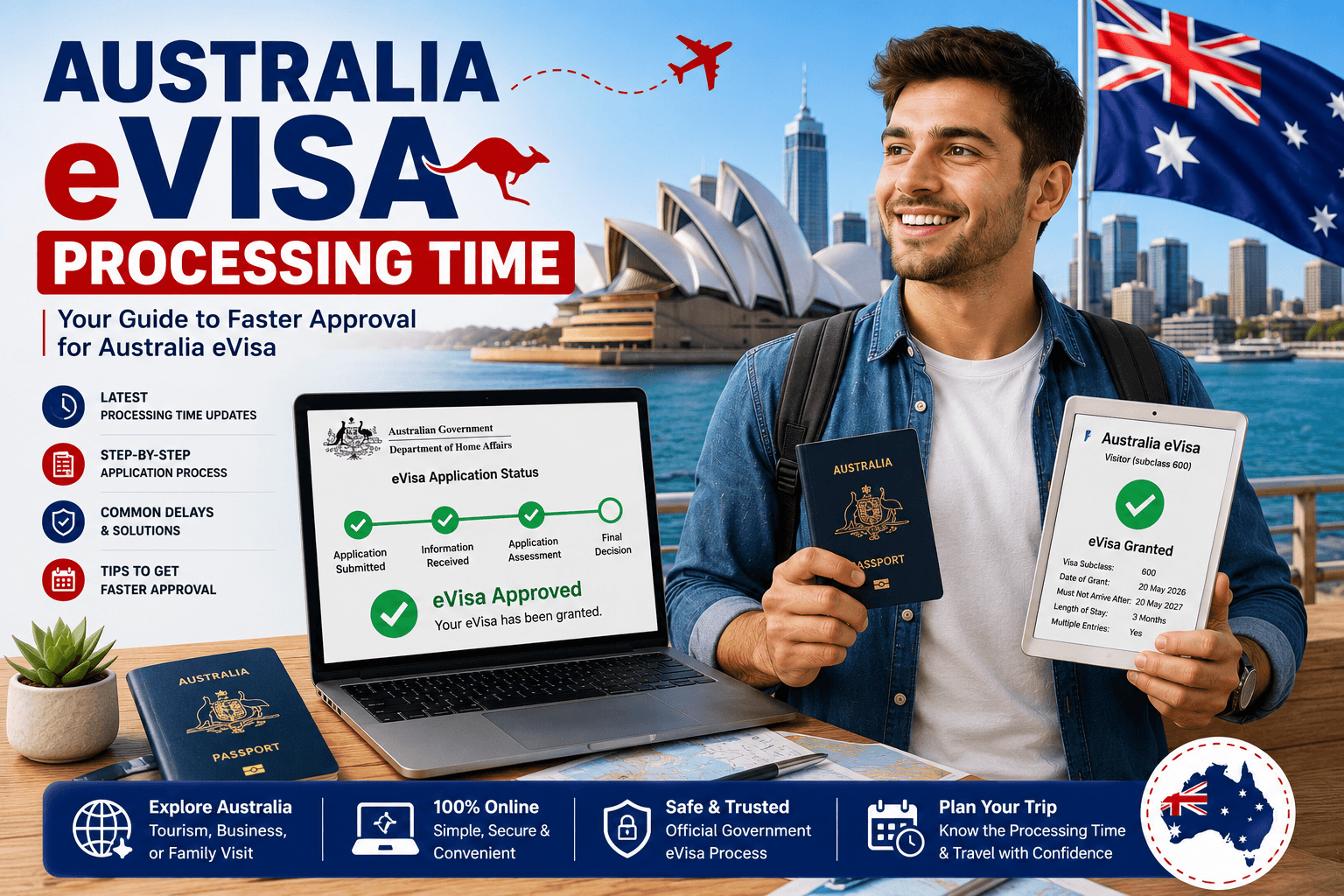
Australia is one of the world’s most popular destinations for tourism, business, family visits, and short-term travel. Every year, millions of travelers apply for an Australian electronic visa (eVisa) because of its convenient online application process and faster document management.
One of the most common questions applicants ask is:
“How long does an Australia eVisa take to process?”
The answer depends on several factors, including the type of eVisa you apply for, the completeness of your application, identity verification, health and character assessments (where required), and the current workload of the Australian Department of Home Affairs.
While some eVisa applications are processed quickly, others may take longer if additional checks or supporting documents are required.
This guide explains how Australia eVisa processing works, the different stages of the application, common reasons for delays, and practical tips to help your application move smoothly.
What Is an Australia eVisa?
An Australia eVisa is an electronic travel authorization linked digitally to your passport. Unlike traditional visas that require a physical visa label, an eVisa is issued electronically once your application is approved.
Depending on your nationality and travel purpose, you may be eligible for different electronic visa options, including visitor and certain business-related travel visas.
Each visa category has its own eligibility requirements and processing timelines.
Who Can Apply for an Australia eVisa?
Eligibility depends on your nationality and the type of visa you intend to apply for.
Applicants generally need to:
- Hold a valid passport
- Meet health requirements where applicable
- Meet character requirements where applicable
- Provide genuine supporting documents
- Meet the conditions of the visa category
Before applying, confirm that your nationality is eligible for the eVisa option you intend to use.
Australia eVisa Application Process
Understanding each stage of the process helps you know what happens after submitting your application.
Step 1: Confirm Your Eligibility
Before applying, ensure you meet the eligibility requirements for the appropriate Australian eVisa category.
Choosing the correct visa type helps prevent unnecessary delays.
Step 2: Prepare Your Supporting Documents
Depending on your visa category, you may need:
- Valid passport
- Passport photograph
- Travel itinerary
- Proof of funds
- Employment documents
- Invitation letter (if applicable)
- Accommodation details
- Additional supporting documents
Providing complete documentation helps your application move more smoothly.
Step 3: Submit Your Online Application
Australia eVisa applications are generally submitted online.
You’ll complete the required forms, upload supporting documents, and pay any applicable government fees.
Ensure that all information matches your passport exactly.
Step 4: Identity Verification
After submission, your identity and passport information may be verified.
Some applicants may also be asked to provide additional information if required.
Step 5: Health and Character Assessment
Depending on your nationality, travel history, intended length of stay, or visa category, the Department of Home Affairs may require:
- Medical examination
- Chest X-ray
- Police clearance certificate
- Additional health information
Not every applicant will be asked to complete these checks.
Step 6: Application Assessment
An immigration officer reviews your application.
The assessment may include:
- Purpose of travel
- Financial capacity
- Travel history
- Identity verification
- Supporting documents
- Compliance with Australian immigration requirements
Step 7: Additional Information Request
If further information is needed, you may be asked to provide:
- Updated passport
- Additional financial documents
- Employment verification
- Travel information
- Identity documents
- Medical information
Responding quickly helps reduce unnecessary delays.
Step 8: Final Decision
Once all required assessments have been completed, the Department of Home Affairs makes a final decision.
If approved, your Australia eVisa is issued electronically and linked directly to your passport.
Factors That Affect Australia eVisa Processing Time
Several factors influence how long your application may take.
Visa Category
Different Australian visa subclasses have different processing procedures and timelines.
Application Completeness
Applications with complete and accurate documentation are generally processed more efficiently.
Identity Verification
Additional identity checks may increase processing time for some applicants.
Health Requirements
Medical examinations or additional health assessments may extend processing.
Character Verification
Police certificates or additional character assessments may also increase processing time.
Seasonal Demand
Applications usually increase during:
- School holidays
- Christmas and New Year
- Summer travel season
- Major international events
Higher demand can result in longer processing times.
How to Reduce Delays
Although you cannot control the Department of Home Affairs’ internal processing, you can reduce avoidable delays by:
- Submitting a complete application
- Uploading clear and readable documents
- Ensuring your passport information is accurate
- Completing any requested medical examinations promptly
- Responding quickly to requests for additional information
- Monitoring your application regularly
If you’re planning a holiday, business trip, or family visit to Australia, understanding each stage of the eVisa process will help you prepare realistic expectations and avoid common mistakes.
Why Is My Australia eVisa Taking Longer Than Expected?
Many applicants become worried when their Australia eVisa application takes longer than expected. In most cases, a longer processing time does not mean your application will be refused.
Every application is assessed individually by the Australian Department of Home Affairs. Some applications are finalized quickly, while others require additional checks before a decision is made.
Incomplete Application
One of the most common reasons for delays is submitting an incomplete application.
Examples include:
- Missing documents
- Incorrect passport details
- Poor-quality document uploads
- Inconsistent personal information
- Missing travel details
- Wrong visa subclass selection
Before submitting your application, carefully review every detail to ensure it matches your passport and supporting documents.
Identity Verification
The Department of Home Affairs may need to verify your identity before finalizing your eVisa.
This may involve checking:
- Passport details
- Personal information
- Travel history
- Previous visa records
- Supporting documents
If any information is unclear or inconsistent, processing may take longer.
Health Requirements
Some applicants may be asked to complete health checks.
This can include:
- Medical examination
- Chest X-ray
- Additional medical reports
If health results are delayed or further medical information is required, your application may take longer.
Character Checks
Australia requires visa applicants to meet character requirements.
Depending on your visa type and personal history, you may be asked to provide:
- Police clearance certificate
- Additional character documents
- Explanation of previous records, if applicable
Character checks can increase the overall processing time.
Additional Document Requests
The Department of Home Affairs may request more information before making a decision.
Common requests include:
- Updated passport copy
- Proof of funds
- Employment confirmation
- Travel itinerary
- Invitation letter
- Accommodation details
- Additional identity documents
Processing usually continues after the requested documents have been reviewed.
High Application Volume
Australia eVisa applications may increase during busy travel periods such as Christmas, New Year, summer holidays, school holidays, and major events.
During these periods, applications may take longer because more people are applying.
What Should You Do While Waiting?
While waiting for your Australia eVisa decision, monitor your online account regularly and respond quickly if additional information is requested.
Avoid submitting duplicate applications unless instructed. A second application may not speed up the process and could complicate your case.
What Happens After Approval?
If your Australia eVisa is approved, it is usually issued electronically and linked to your passport.
Before travelling, check that your visa details are correct, including your full name, passport number, visa subclass, validity dates, entry conditions, and stay conditions.
Frequently Asked Questions
How long does an Australia eVisa take to process?
Processing time varies depending on the visa type, application completeness, identity checks, health requirements, character checks, and current application volume.
Is an Australia eVisa stamped in my passport?
No. An Australia eVisa is usually issued electronically and linked to your passport.
Does applying online mean faster approval?
Online applications are convenient, but approval time still depends on your visa type and whether additional checks are required.
Why is my Australia eVisa delayed?
Common reasons include missing documents, identity verification, health checks, character checks, high application volume, or requests for additional information.
Can I speed up my Australia eVisa?
Generally, no. The best way to avoid delays is to submit a complete application, provide accurate documents, and respond quickly to requests.
Can I travel before my eVisa is approved?
No. You should wait until your visa has been approved before travelling to Australia.
What if my passport changes after applying?
You may need to update your passport details through the official application system. Your eVisa must be linked to the correct passport.
What happens if my eVisa is refused?
You will usually receive a decision explaining the refusal. Depending on your situation, you may be able to address the issues and apply again.
Do all applicants need medical exams?
No. Medical exams depend on your visa type, intended stay, country of residence, travel history, and individual circumstances.
Can I work with an Australia eVisa?
It depends on the visa subclass. Some visitor visas do not allow work, while other visa types may include work rights. Always check your visa conditions.
Final Thoughts
Australia eVisa processing time varies because every application is assessed individually. While some applicants receive decisions quickly, others may wait longer due to identity checks, health requirements, character assessments, additional document requests, or high application volume.
The best way to reduce avoidable delays is to submit accurate information, upload complete documents, check your passport details carefully, and respond promptly to any request from the Department of Home Affairs.