Canada remains one of the world’s most popular destinations for tourism, family visits, business trips, and short-term travel. Every year, millions of people apply for a Canada Visitor Visa, officially known as a Temporary Resident Visa (TRV).
After submitting an application, one of the first questions applicants ask is:


“How long does Canada Visitor Visa approval take?”
The answer depends on several factors, including your country of residence, the completeness of your application, biometrics, medical examination requirements (if applicable), background verification, and Immigration, Refugees and Citizenship Canada (IRCC)’s current workload.
Some applications are finalized relatively quickly, while others require additional checks before a final decision is made.
This guide explains the visitor visa approval process, the stages your application goes through, the factors that influence processing times, and what you can do to help avoid unnecessary delays.
What Is a Canada Visitor Visa?
A Canada Visitor Visa, also called a Temporary Resident Visa (TRV), allows eligible foreign nationals to travel to Canada temporarily.
Common reasons for visiting include:
- Tourism
- Visiting family and friends
- Business meetings
- Conferences
- Medical treatment
- Short-term courses
- Special events
A visitor visa generally does not allow you to work in Canada unless you have separate authorization.
How Does the Canada Visitor Visa Approval Process Work?
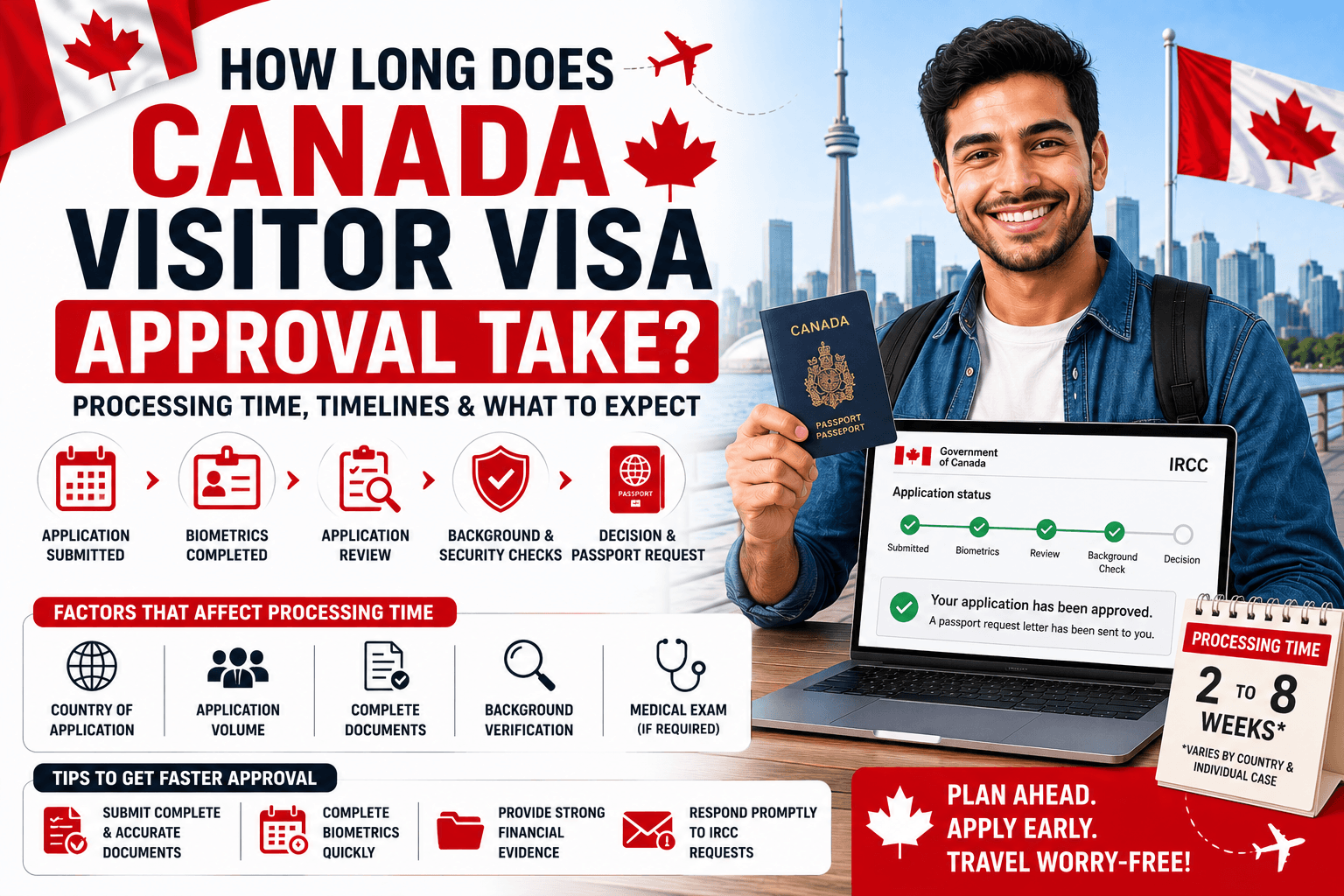
Once you submit your application, IRCC processes it through several stages before making a final decision.
Step 1: Submit Your Application
Most applicants submit their visitor visa application online through the IRCC portal.
You’ll normally provide:
- Personal information
- Passport details
- Employment history
- Travel history
- Family information
- Purpose of travel
You’ll also upload all required supporting documents.
Step 2: Pay the Application Fees
After completing your application, you’ll pay the required government processing fees online.
Keep your payment confirmation for future reference.
Step 3: Complete Biometrics
Most applicants are required to provide:
- Fingerprints
- Digital photograph
Biometrics help IRCC verify your identity but do not mean your visa has been approved.
Step 4: Eligibility Review
An immigration officer reviews your application to determine whether you qualify for a Temporary Resident Visa.
The officer may assess:
- Purpose of visit
- Financial situation
- Employment status
- Family ties
- Travel history
- Supporting documents
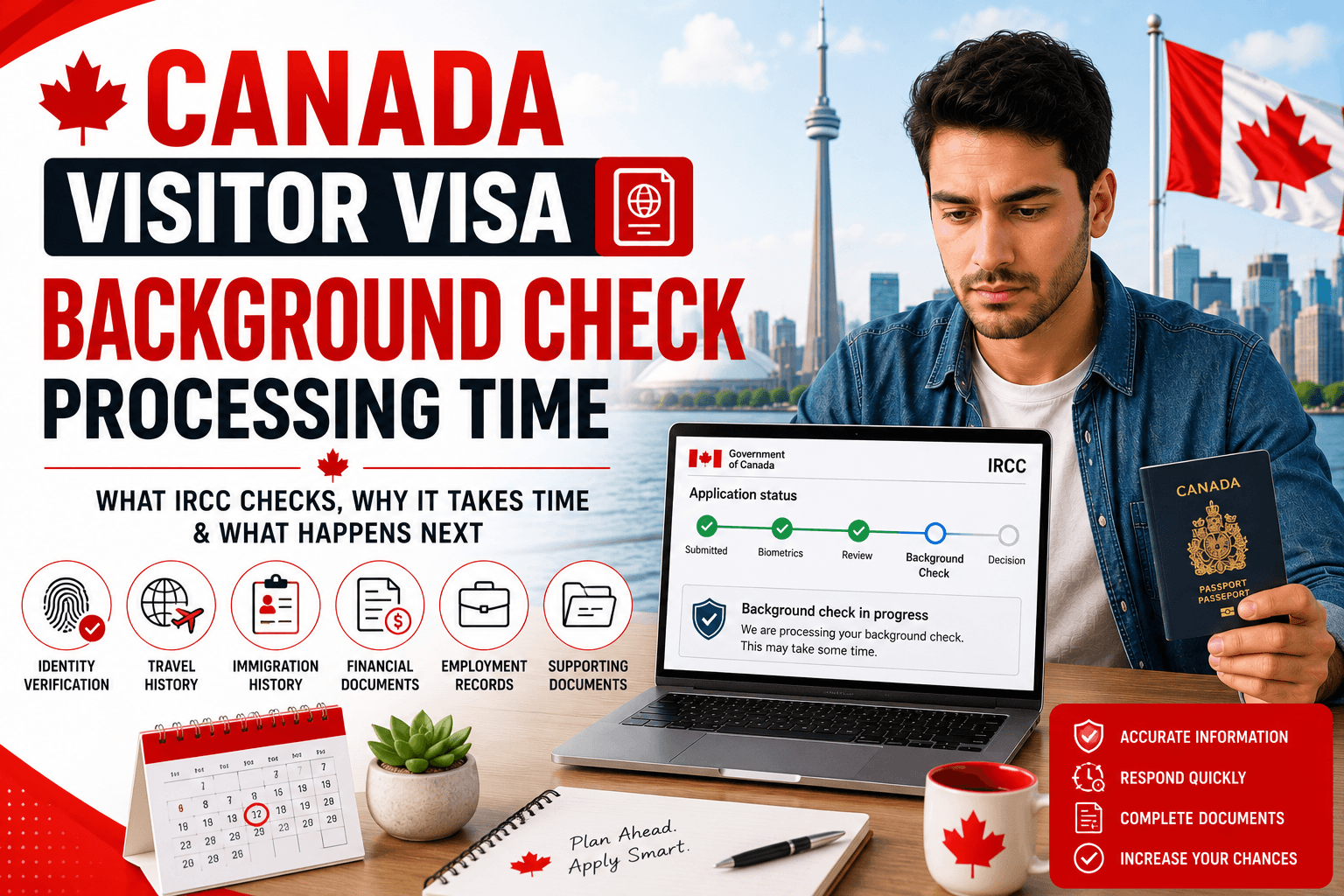
Step 5: Background Verification
IRCC may verify:
- Identity
- Immigration history
- Previous visa applications
- International travel history
- Supporting documents
Some applications require more extensive verification than others.
Step 6: Medical Examination (If Required)
Certain applicants may be asked to complete an immigration medical examination.
If required, IRCC reviews the medical results before continuing with the application.
Step 7: Final Decision
Once all assessments have been completed, IRCC makes a final decision.
If approved, you’ll usually receive a Passport Request (PPR) if your passport has not already been submitted.
After visa printing, your passport is returned through the Visa Application Centre or courier service.
Factors That Affect Canada Visitor Visa Approval Time
Several factors influence how long it takes IRCC to approve a visitor visa.
Country of Application
Processing times vary depending on the country where the application is submitted.
Some visa offices process higher volumes of applications than others.
Application Completeness
Applications with complete and accurate documentation generally move through processing more efficiently.
Missing or incorrect documents are a common cause of delays.
Financial Evidence
IRCC reviews whether you have enough funds to cover:
- Flights
- Accommodation
- Daily living expenses
- Return travel
Strong financial evidence can help support your application.
Background Verification
Applications requiring additional identity or travel history checks may take longer.
Medical Examination
If an immigration medical examination is required, IRCC must receive and assess the medical results before making a final decision.
Seasonal Demand
Visitor visa applications often increase during:
- Summer holidays
- Christmas and New Year
- School vacation periods
- Major international events
Higher demand can lead to longer processing times.
How to Improve Your Chances of Faster Approval
While no one can guarantee faster processing, you can reduce avoidable delays by following these best practices.
Submit a Complete Application
Double-check every form and supporting document before submitting your application.
Provide Strong Financial Documents
Include recent and genuine financial records that clearly demonstrate your ability to fund your trip.
Complete Biometrics Promptly
Book and attend your biometrics appointment as soon as possible after receiving instructions from IRCC.
Complete Your Medical Examination Quickly
If IRCC requests a medical examination, schedule it without unnecessary delay.
Respond Quickly to IRCC Requests
If IRCC asks for additional documents or clarification, upload the requested information as soon as possible.
Prompt responses help your application continue moving through processing.
If you’re looking for information about specific stages of the application process, you may also find our Canada Visitor Visa Processing Time After Eligibility Review, Canada Visitor Visa Processing Time After Medical Exam, Canada Visitor Visa Processing Time After Passport Request, and Why Is My Canada Visitor Visa Taking So Long? guides useful.
Why Is My Canada Visitor Visa Approval Taking Longer Than Expected?
If your Canada Visitor Visa application has been in progress for longer than you expected, there’s usually no immediate reason to worry.
A longer processing time does not automatically mean your application will be refused.
IRCC carefully reviews every application before making a final decision, and some applications naturally require more time than others.
Below are the most common reasons why visitor visa approval may take longer.
Background Verification
One of the most common reasons for delays is background verification.
IRCC may verify:
- Identity
- Previous visa applications
- Immigration history
- International travel history
- Supporting documents
Applications requiring additional verification often remain under review for longer.
Security Screening
Every visitor visa applicant undergoes security screening before approval.
The length of this process varies depending on the applicant’s circumstances.
Security screening is completed internally and cannot normally be expedited.
Medical Examination
If you’re required to complete an immigration medical examination, IRCC must receive and assess your medical results before making a final decision.
If additional medical information is required, processing may take longer.
Additional Document Requests
IRCC may request additional information, including:
- Updated bank statements
- Employment confirmation
- Invitation letter
- Passport copy
- Travel itinerary
- Proof of funds
- Family relationship documents
Processing generally resumes after the requested documents have been received and reviewed.
High Application Volume
Visitor visa applications often increase during:
- Summer holidays
- Christmas and New Year
- Spring break
- School vacation periods
Higher application volumes can increase overall processing times.
Incomplete Applications
Applications containing missing or inconsistent information often require additional review.
Examples include:
- Missing supporting documents
- Poor-quality document scans
- Incorrect application forms
- Missing translations
- Inconsistent financial information
Preparing a complete application from the start helps reduce avoidable delays.
What Should You Do While Waiting?
Although you cannot speed up IRCC’s internal review process, there are several things you can do while your application is being processed.
Monitor Your IRCC Account
Check your online account regularly for updates such as:
- Eligibility review
- Background verification
- Medical results
- Passport Request (PPR)
- Final decision
Some stages may remain unchanged for several weeks while internal reviews continue.
Respond Quickly to Requests
If IRCC asks for additional documents or clarification, upload the requested information as soon as possible.
Prompt responses help prevent unnecessary delays.
Keep Your Documents Current
If your passport or another important document expires while your application is being processed, follow IRCC’s instructions for providing updated information.
Avoid Multiple Applications
Submitting another visitor visa application while one is already in progress generally does not speed up processing and may complicate your case.
How to Track Your Canada Visitor Visa Application
You can track your application through your online IRCC account.
Common status updates include:
- Application submitted
- Biometrics completed
- Eligibility review
- Background verification
- Medical results received (if required)
- Passport Request (PPR)
- Final decision
If you’ve already submitted your passport, your Visa Application Centre (VAC) may also provide:
- Email notifications
- SMS updates (if purchased)
- Courier tracking
- Passport collection notifications
Frequently Asked Questions
How long does Canada Visitor Visa approval usually take?
The processing time varies depending on your country of application, document verification, background checks, medical requirements, and IRCC’s current workload.
Does biometrics mean my visa is approved?
No.
Biometrics only verify your identity. IRCC must still complete eligibility, background, and security assessments before making a final decision.
Does eligibility review mean approval?
No.
Eligibility review simply means an officer is assessing whether you meet the requirements for a Temporary Resident Visa.
Why hasn’t my application status changed?
This is normal.
Many applications remain unchanged for several weeks while IRCC completes internal reviews.
Can I speed up my visitor visa approval?
Generally, no.
The best way to avoid delays is to submit a complete application, provide accurate documents, and respond quickly if IRCC requests additional information.
Will IRCC contact me if more documents are needed?
Yes.
IRCC will normally notify you through your online account or by email.
What happens after Passport Request (PPR)?
You’ll submit your passport through the Visa Application Centre.
IRCC will print your visa and return your passport once processing has been completed.
Can I travel before receiving my passport?
No.
You should wait until your passport has been returned with the visitor visa before making travel arrangements.
Can I reapply if my application is refused?
Yes.
If you address the reasons for refusal and provide stronger supporting evidence, you may submit a new application.
What are the most common reasons for refusal?
Common reasons include:
- Insufficient financial evidence
- Weak ties to your home country
- Unclear purpose of visit
- Incomplete documentation
- Inconsistent information
- Previous immigration concerns
Final Thoughts
Canada Visitor Visa approval times vary from one applicant to another because every application is assessed individually. While some applications are finalized quickly, others require additional background verification, security screening, medical assessments, or document reviews before a decision can be made.
If your application is taking longer than expected, remain patient and continue monitoring your IRCC account for updates. In many cases, delays are simply part of the normal review process and do not indicate that your application will be refused.
Submitting a complete application, providing strong financial evidence, completing biometrics and medical examinations promptly, and responding quickly to IRCC requests remain the best ways to improve your chances of a smooth approval process.