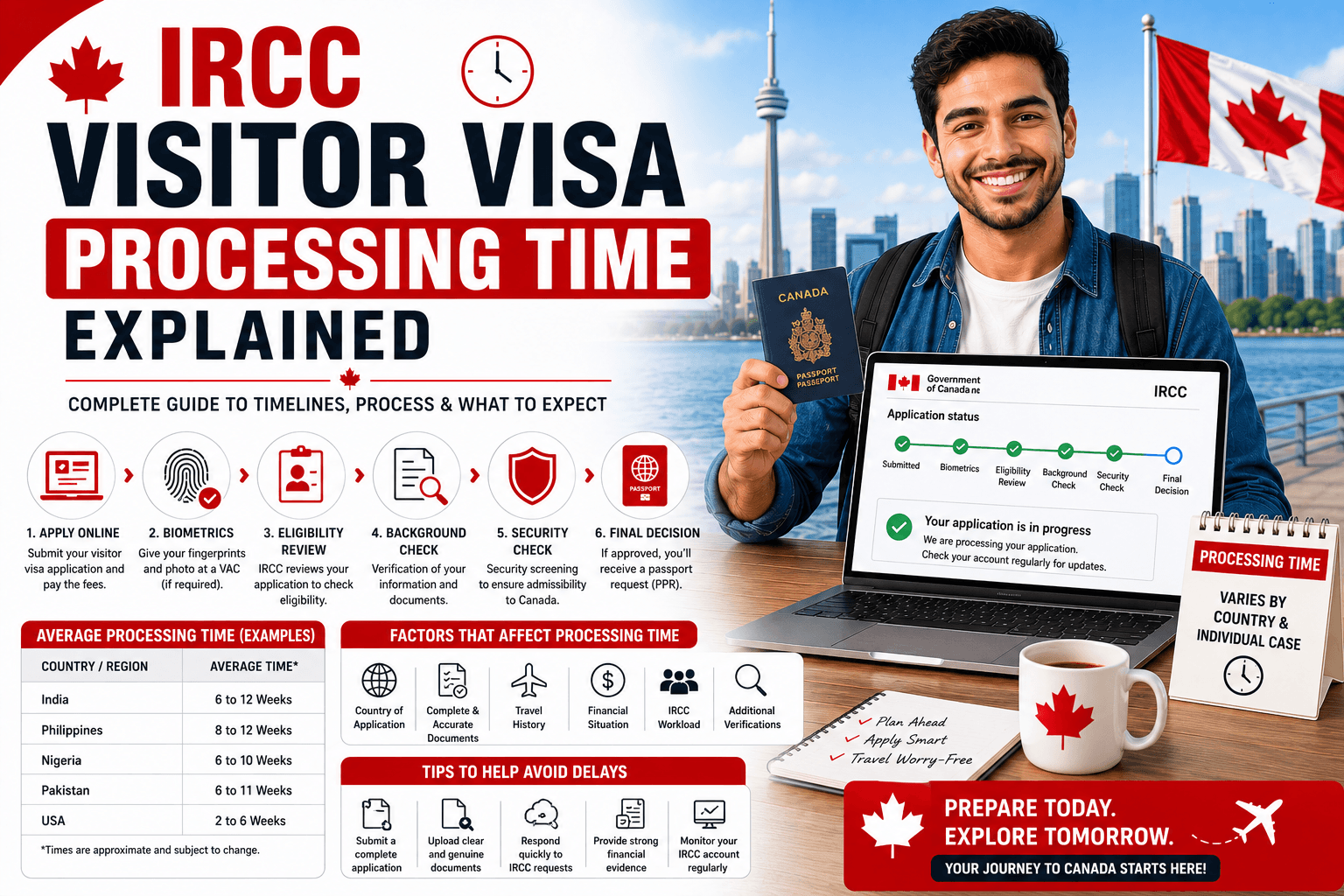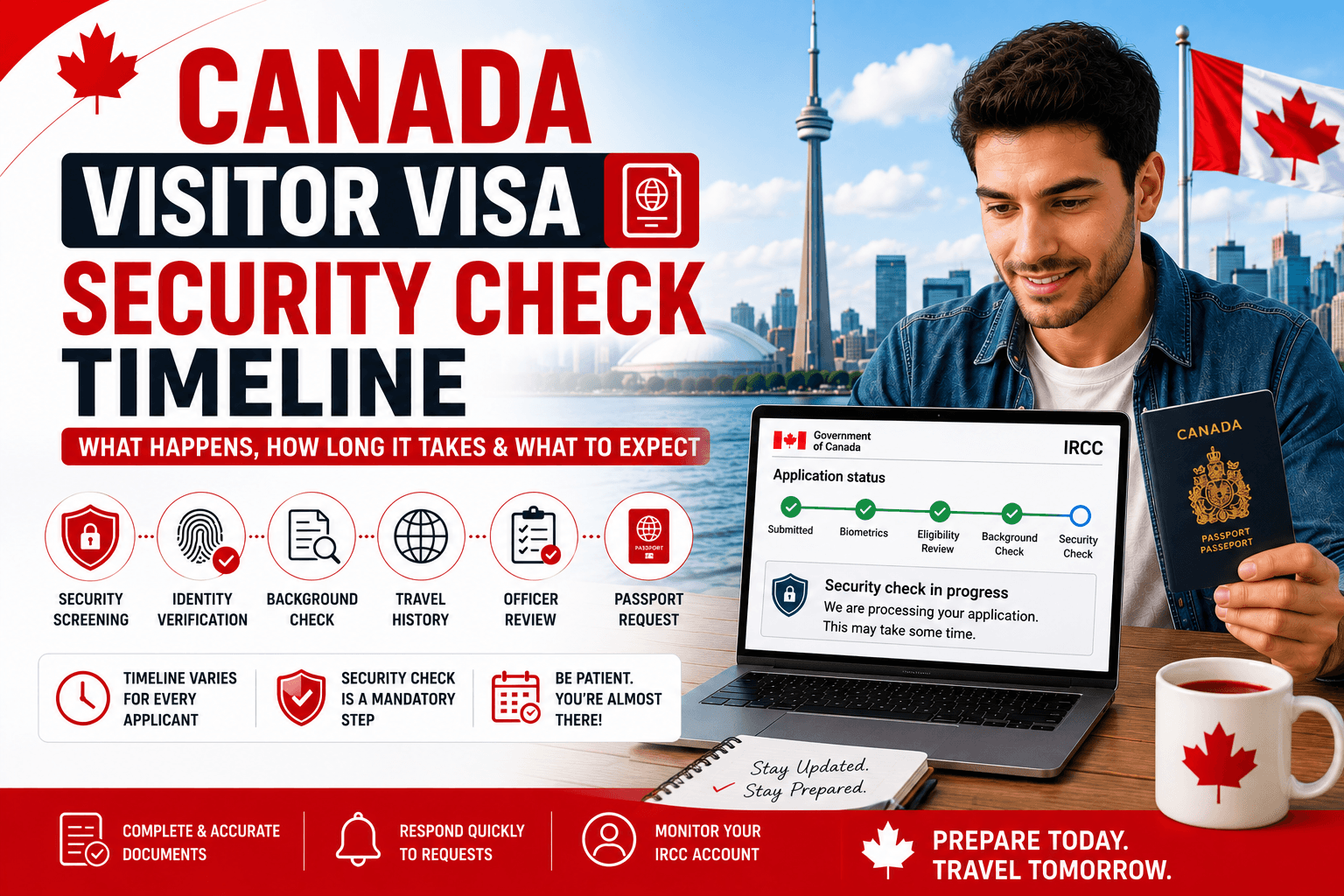
After submitting a Canada Visitor Visa application, many applicants closely monitor their Immigration, Refugees and Citizenship Canada (IRCC) account for updates. One stage that often raises questions is the security check.
Applicants frequently ask:


“How long does the Canada Visitor Visa security check take?”
The answer varies because every application is different. Some security checks are completed quickly, while others require additional time depending on the applicant’s travel history, personal circumstances, and the complexity of the application.
It’s important to understand that entering the security check stage is a normal part of the visitor visa process. A security check does not mean something is wrong with your application, nor does it indicate that your visa will be refused.
This guide explains what the security check is, why it is conducted, the factors that influence its timeline, and what happens after the security review is complete.
What Is the Canada Visitor Visa Security Check?
The security check is one of the final assessments completed before IRCC makes a decision on your visitor visa application.
Its purpose is to ensure that applicants meet Canada’s security and admissibility requirements before entering the country.
Every visitor visa application undergoes an appropriate level of security screening.
The depth of the review depends on the individual applicant and their circumstances.
Does Security Check Mean My Visa Is Approved?
No.
A security check does not mean your visitor visa has been approved.
It simply means IRCC is completing one of the final stages of processing.
Before issuing a final decision, IRCC may still complete:
- Final eligibility review
- Background verification
- Administrative checks
- Final officer assessment
Only after every required assessment has been completed can IRCC approve or refuse the application.
What Happens During the Security Check?
Although IRCC does not publish every internal procedure, the security check generally involves several assessments.
Step 1: Identity Confirmation
IRCC confirms your identity using information such as:
- Passport details
- Personal information
- Biometrics
- Immigration records
Step 2: Immigration History Review
The officer may review your previous immigration history, including:
- Previous Canadian visas
- Study permits
- Work permits
- Previous visa refusals
- Compliance with immigration laws
Step 3: Travel History Review
Your international travel history may also be reviewed.
This helps IRCC better understand your previous immigration compliance and travel patterns.
Step 4: Security Screening
IRCC conducts security assessments as required under Canadian immigration laws.
This stage is completed internally and cannot normally be expedited by applicants.
Step 5: Final Officer Review
After the security assessment has been completed, an immigration officer performs a final review of your application before making a decision.
What Happens After the Security Check?
Once the security review has been completed, your application usually moves to one of the final stages.
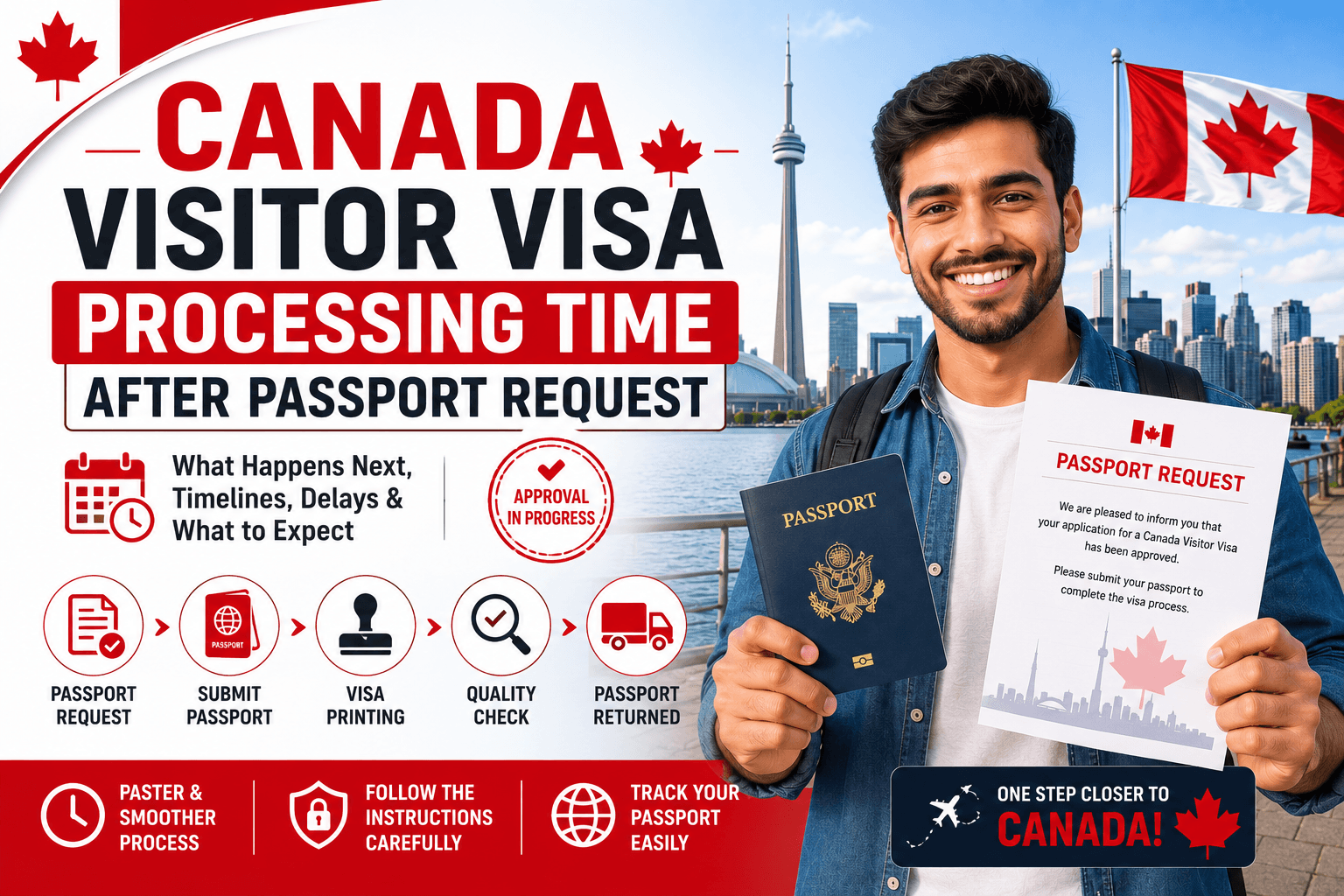
Passport Request (PPR)
If your application is approved, IRCC will normally issue a Passport Request (PPR) if your passport has not already been submitted.
You’ll then submit your passport through the Visa Application Centre (VAC) for visa stamping.
Visa Printing
IRCC prints your Temporary Resident Visa (TRV) and performs final quality checks before returning your passport.
Passport Return
Your passport is returned through the Visa Application Centre or courier service, depending on the return option you selected.
Factors That Affect the Security Check Timeline
Several factors influence how long security screening may take.
Individual Circumstances
Every application is unique.
Some applicants require only routine security screening, while others require more detailed verification.
Travel History
Applicants with extensive international travel histories may require additional review.
Immigration History
Previous visa applications, permits, or immigration records may influence the amount of verification required.
Additional Information Requests
If IRCC requests further documents or clarification during the security check, processing usually pauses until the requested information has been reviewed.
Application Volume
Higher numbers of visitor visa applications during peak travel seasons may increase overall processing times.
How to Reduce the Risk of Delays
Although applicants cannot control IRCC’s internal security screening process, they can reduce avoidable delays.
Submit Accurate Information
Ensure every detail in your application is truthful, complete, and consistent.
Upload Clear Supporting Documents
Provide high-quality copies of all required documents.
Incomplete or unclear documents may require additional verification.
Respond Quickly to IRCC Requests
If IRCC asks for additional information during processing, submit the requested documents as soon as possible.
Monitor Your IRCC Account
Check your account regularly for:
- Security check updates
- Additional document requests
- Passport Request (PPR)
- Final decision notifications
If you’re following different stages of your application, you may also find our Canada Visitor Visa Background Check Processing Time, Canada Visitor Visa Processing Time After Eligibility Review, Canada Visitor Visa Processing Time After Passport Request, and Why Is My Canada Visitor Visa Taking So Long? guides useful.
Why Is My Canada Visitor Visa Security Check Taking So Long?
Many applicants become concerned when their IRCC account shows that the security check has been in progress for an extended period.
In most cases, this is completely normal.
A longer security check does not automatically mean your visitor visa will be refused.
Security screening is one of the final internal assessments completed before IRCC makes a decision, and the time required varies from one applicant to another.
Individual Risk Assessment
Every visitor visa application is assessed individually.
Some applicants require only routine security screening, while others may need additional verification based on their personal circumstances.
This difference is one of the main reasons processing times vary.
Identity Verification
As part of the security process, IRCC confirms your identity using information such as:
- Passport details
- Personal information
- Biometrics
- Previous immigration records
If any information requires clarification, additional verification may extend processing.
Immigration History Review
IRCC may review your previous immigration history, including:
- Previous Canadian visas
- Study permits
- Work permits
- Previous visa refusals
- Compliance with immigration laws
Applicants with more extensive immigration histories may require additional review.
Travel History Assessment
Applicants who have travelled internationally on multiple occasions may undergo additional travel history verification.
IRCC may review:
- Previous visas
- Countries visited
- Entry and exit records
- Compliance with immigration requirements
This review helps officers understand your travel background before making a decision.
Administrative Processing
Some applications require additional administrative processing before the security assessment can be finalized.
These internal procedures are a normal part of IRCC’s review process and cannot usually be expedited.
Additional Document Requests
Sometimes IRCC requests additional information during processing.
Examples include:
- Updated passport
- New bank statements
- Employment confirmation
- Travel itinerary
- Invitation letter
- Additional identification documents
Processing generally resumes once the requested documents have been received and reviewed.
High Application Volume
Security checks may also take longer during busy travel seasons.
Periods of increased demand often include:
- Summer holidays
- Christmas and New Year
- School vacation periods
- Major international events
During these times, IRCC processes a significantly higher number of visitor visa applications.
How to Avoid Security Check Delays
Although applicants cannot influence IRCC’s internal security review, several practical steps can help reduce unnecessary delays.
Submit Accurate Information
Ensure every detail in your application is truthful, complete, and consistent with your supporting documents.
Upload High-Quality Documents
Provide clear, readable copies of all required documents.
Poor-quality scans or incomplete documents may require additional verification.
Respond Quickly to IRCC Requests
If IRCC asks for more information during processing, upload the requested documents as soon as possible.
Prompt responses help your application continue moving through the review process.
Monitor Your IRCC Account
Check your account regularly for updates such as:
- Security review
- Additional document requests
- Passport Request (PPR)
- Final decision
It’s normal for your account to remain unchanged for some time while internal assessments continue.
What Happens After the Security Check?
Once the security assessment has been completed, your application usually proceeds to the final decision stage.
If approved, IRCC will normally issue a Passport Request (PPR) if your passport has not already been submitted.
You’ll then:
- Submit your passport through the Visa Application Centre (VAC).
- Wait for visa printing.
- Receive your passport with the Canada Visitor Visa.
Before travelling, verify that your visa contains the correct:
- Full name
- Passport number
- Visa validity dates
- Number of entries
If you notice any errors, contact the Visa Application Centre immediately.
Frequently Asked Questions
How long does the Canada Visitor Visa security check take?
There is no fixed timeline. The duration depends on your individual circumstances, travel history, immigration history, document verification, and IRCC’s overall workload.
Does a security check mean my visa is approved?
No.
A security check simply means IRCC is completing one of its required assessments before making a final decision.
Why hasn’t my security check status changed?
This is normal.
Many applications remain in the security review stage while IRCC completes internal assessments that are not immediately reflected in your online account.
Can I speed up the security check?
Generally, no.
Security screening is an internal process that cannot normally be expedited by applicants.
Will IRCC contact me if additional documents are required?
Yes.
If IRCC needs more information, you’ll usually receive a notification through your online account or by email.
What happens after Passport Request (PPR)?
You’ll submit your passport through the Visa Application Centre.
Once the visa has been printed, your passport will be returned for travel.
Can I travel while the security check is in progress?
No.
You should wait until your visitor visa has been approved and your passport has been returned before making travel arrangements.
Can I work in Canada with a visitor visa?
No.
A Temporary Resident Visa (TRV) generally does not authorize employment in Canada unless you have separate work authorization.
What are the most common reasons for refusal?
Common reasons include:
- Insufficient financial evidence
- Weak ties to your home country
- Incomplete documentation
- Unclear purpose of visit
- Inconsistent information
- Previous immigration concerns
Can I reapply if my application is refused?
Yes.
After addressing the reasons for refusal and strengthening your supporting documents, you may submit a new application.
Final Thoughts
The security check is a standard part of the Canada Visitor Visa application process and is designed to ensure that applicants meet Canada’s security and admissibility requirements before a visa is issued. Although this stage can sometimes take longer than expected, it is often simply a routine part of IRCC’s review process rather than a sign of a problem with your application.
The best way to support a smooth process is to provide complete and accurate information, upload high-quality supporting documents, respond promptly to any IRCC requests, and monitor your online account for updates. With patience and proper preparation, you’ll be in the best position to receive a final decision on your visitor visa application.