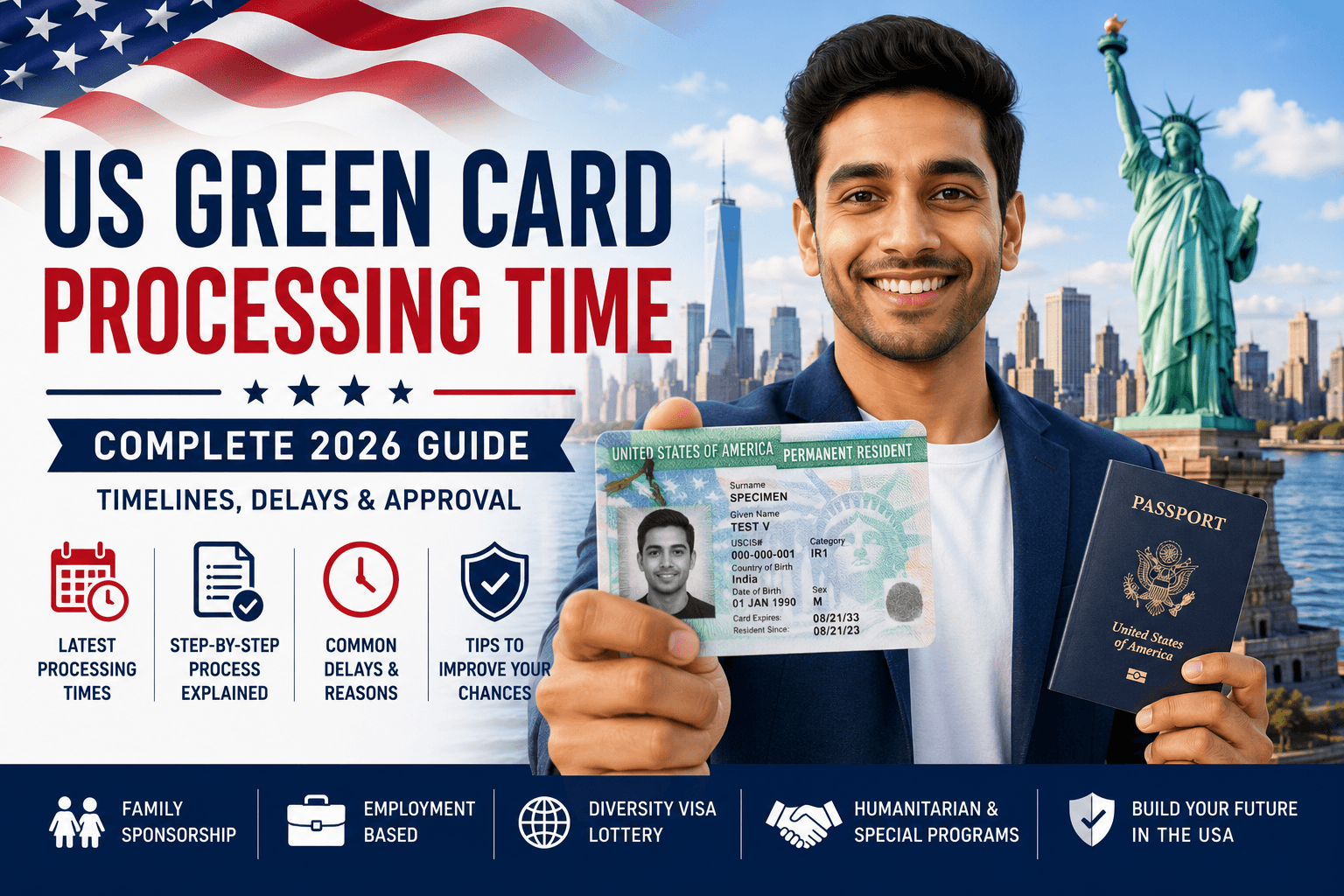
Obtaining a Green Card is one of the most significant milestones for anyone planning to live and work permanently in the United States. A Green Card grants lawful permanent resident status, allowing eligible individuals to live, work, and build a future in the U.S. while enjoying many of the rights and protections available to permanent residents.
Every year, millions of people apply for Green Cards through family sponsorship, employment, humanitarian programs, refugee or asylum status, and the Diversity Visa Lottery.


One of the most common questions applicants ask is:
“How long does it take to get a US Green Card?”
The answer depends on several factors.
Unlike temporary visas, Green Card applications follow different processing pathways depending on the immigration category, visa availability, country of birth, and government workload. Some applicants complete the process relatively quickly, while others wait several months or even years because of annual visa limits and application backlogs.
Understanding the complete Green Card process can help you prepare realistic expectations and avoid unnecessary delays.
This guide explains how Green Card processing works, the stages involved, factors that influence processing time, and practical ways to strengthen your application.
What Is a US Green Card?
A Green Card, officially known as a Permanent Resident Card, allows eligible foreign nationals to become lawful permanent residents of the United States.
Green Card holders can generally:
- Live permanently in the United States
- Work for almost any employer
- Travel in and out of the country subject to immigration rules
- Sponsor certain eligible family members
- Eventually apply for U.S. citizenship if they meet the eligibility requirements
Unlike temporary visas, permanent residence does not expire simply because your employment or studies end, although the Green Card itself must be renewed periodically.
Ways to Obtain a US Green Card
There are several immigration pathways that may lead to permanent residence.
The most common include:
- Family-sponsored Green Cards
- Employment-based Green Cards
- Diversity Visa (DV) Lottery
- Refugee or Asylee status
- Special immigrant categories
- Humanitarian programs
- Investment-based immigration (where applicable)
Each category has its own eligibility requirements and processing timeline.
How Long Does US Green Card Processing Take?
There is no single processing time that applies to every applicant.
The total timeline depends on several stages, including:
- Petition approval (where required)
- Visa availability
- Submission of your Green Card application
- Biometrics appointment
- Background checks
- Medical examination
- Interview (if required)
- Final decision
Applicants from countries with high demand may experience longer waiting periods because of annual visa quotas.
Step 1: Filing the Initial Petition
Many Green Card categories begin with an immigration petition.
For example:
- Family-based applicants often require a petition filed by an eligible U.S. citizen or lawful permanent resident.
- Employment-based applicants are commonly sponsored by a U.S. employer.
The petition establishes your eligibility under the chosen immigration category.
Once submitted, U.S. Citizenship and Immigration Services (USCIS) reviews the petition before processing can continue.
Step 2: Waiting for Visa Availability
For many immigration categories, approval of the petition does not immediately result in a Green Card.
Applicants may also need to wait for an immigrant visa number to become available.
Visa availability depends on:
- Immigration category
- Annual visa limits
- Country of chargeability
- Priority date
Applicants in categories with high demand often experience longer waiting periods.
Step 3: Submit Your Green Card Application
When eligible, applicants proceed with their permanent residence application.
Depending on their circumstances, this may involve:
- Adjustment of Status (for eligible applicants already in the United States)
- Consular Processing (for applicants outside the United States)
Applicants should ensure every document is accurate and complete before submission.
Typical supporting documents include:
- Passport
- Birth certificate
- Marriage certificate (if applicable)
- Police records where required
- Financial support documents
- Employment records
- Civil documents
- Immigration records
Incomplete documentation remains one of the leading causes of processing delays.
Step 4: Biometrics Appointment
Most applicants are scheduled for a biometrics appointment after submitting their Green Card application.
During the appointment, USCIS collects:
- Fingerprints
- Digital photograph
- Signature
Biometrics allow the U.S. government to verify your identity and conduct background checks.
Completing biometrics does not mean your Green Card has been approved.
Step 5: Medical Examination
Many applicants must complete an immigration medical examination conducted by an approved physician.
The examination helps determine whether the applicant meets the health-related admissibility requirements for permanent residence.
If additional medical information is required, processing may take longer.
Step 6: Background Checks
Government agencies review:
- Identity information
- Immigration history
- Criminal history
- Employment records
- Travel history
- Security information
Straightforward applications often move through this stage more efficiently.
Step 7: Green Card Interview
Many applicants are required to attend an interview before a final decision is made.
The immigration officer may ask questions about:
- Your application
- Supporting documents
- Family relationships
- Employment
- Immigration history
- Future plans in the United States
Applicants should answer honestly and provide any additional documentation requested.
Step 8: Final Decision
After reviewing all available information, USCIS or the U.S. consular officer makes a final decision.
If approved, applicants receive instructions regarding the issuance of their Green Card or immigrant visa, depending on where they applied.
Factors That Affect US Green Card Processing Time
Several factors influence how long your application takes.
Immigration Category
Different Green Card categories have different processing procedures and annual limits.
Family-sponsored, employment-based, humanitarian, and Diversity Visa applications all follow different timelines.
Country of Birth
Applicants from countries with higher demand may experience longer waits because of annual visa quotas.
Visa Availability
Some applicants cannot proceed until an immigrant visa number becomes available under their category.
Government Workload
Processing times may increase when USCIS or U.S. consulates receive unusually high numbers of applications.
Request for Evidence (RFE)
If USCIS requires additional documents or clarification, it may issue a Request for Evidence.
Responding promptly helps avoid unnecessary delays.
Background and Security Checks
Applications requiring additional verification may take longer than straightforward cases.
How to Improve Your Green Card Processing Experience
Although no applicant can guarantee faster approval, several best practices can help reduce avoidable delays.
Submit Complete Documentation
Carefully review every supporting document before filing your application.
Ensure that:
- Names match across documents.
- Dates are accurate.
- Copies are clear and legible.
- Required translations are included where necessary.
Respond Quickly to Requests
If USCIS issues a Request for Evidence or asks for additional documents, respond as soon as possible.
Delays in responding can significantly extend overall processing time.
Attend Every Appointment
Do not miss scheduled:
- Biometrics appointments
- Medical examinations
- Interviews
Rescheduling appointments can substantially delay your application.
Keep Your Contact Information Updated
If your address, email address, or phone number changes, update USCIS promptly to avoid missing important notices.
If you’re also considering immigration to Canada, our Canada PR Processing Time, Canada Express Entry Processing Time, and Canada Open Work Permit Processing Time guides explain how Canada’s permanent residence pathways compare with U.S. immigration options.
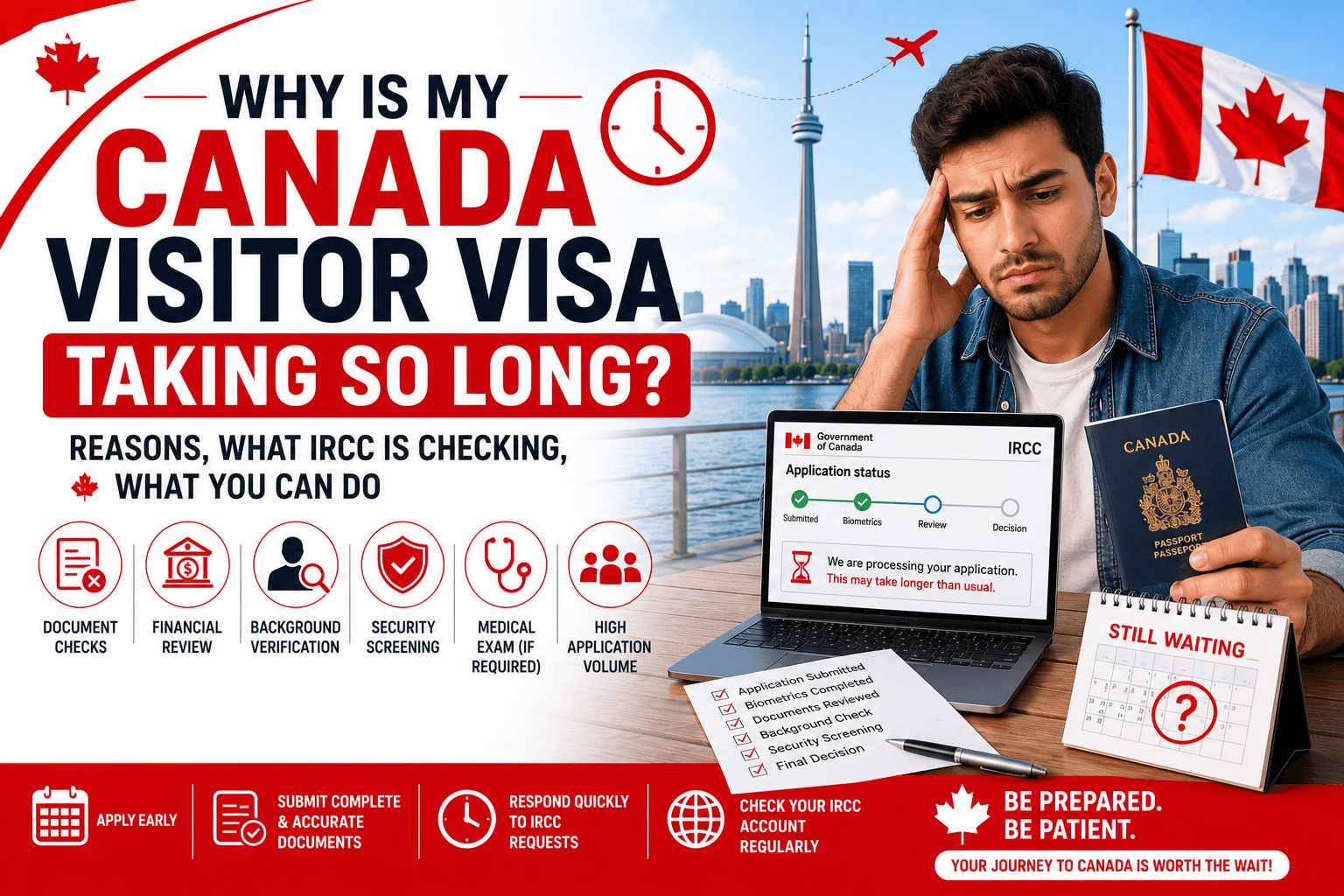
Why Is My US Green Card Application Taking So Long?
Waiting for a Green Card decision can be one of the most challenging parts of the U.S. immigration process. Unlike temporary visas, permanent residence applications often involve multiple government agencies, annual visa limits, and extensive background checks.
While some applicants receive approval relatively quickly, others may wait significantly longer because of their immigration category or additional verification requirements.
A longer processing time does not automatically mean there is a problem with your application.
Below are the most common reasons why Green Card applications take longer than expected.
Visa Backlogs
One of the biggest reasons for delays is visa availability.
Many Green Card categories are subject to annual numerical limits.
This means applicants may have to wait until an immigrant visa number becomes available before USCIS or the U.S. Department of State can issue a final approval.
Waiting times vary depending on:
- Immigration category
- Priority date
- Country of birth
- Annual visa allocation
Applicants from countries with high demand often experience longer waiting periods.
Background Checks
Every Green Card applicant undergoes background verification before permanent residence can be granted.
Government agencies review:
- Immigration history
- Identity records
- Previous visas
- Employment history
- Travel history
- Criminal history (where applicable)
Straightforward applications generally move through this stage more efficiently.
Security Screening
Security screening is completed before every Green Card application is approved.
Applicants cannot influence or speed up this process.
The amount of time required depends on individual circumstances.
Medical Examination Review
Most applicants must complete an immigration medical examination.
USCIS reviews the examination to confirm that applicants satisfy the health-related admissibility requirements.
Processing may take longer if:
- Additional medical reports are required
- Further testing is requested
- Medical documentation expires before approval
Request for Evidence (RFE)
USCIS may issue a Request for Evidence (RFE) if additional information is needed.
Common RFEs involve:
- Missing civil documents
- Financial sponsorship evidence
- Employment verification
- Relationship documentation
- Identity clarification
- Medical records
Processing usually pauses until the requested evidence has been received and reviewed.
Interview Scheduling
Many Green Card applicants are required to attend an interview before a final decision is made.
Interview scheduling depends on:
- Local USCIS office workload
- Consular appointment availability
- Immigration category
Some applicants wait longer simply because interview appointments are limited.
Government Workload
USCIS and U.S. embassies process millions of immigration applications every year.
Periods of increased demand, staffing shortages, or policy changes can affect processing times across multiple immigration categories.
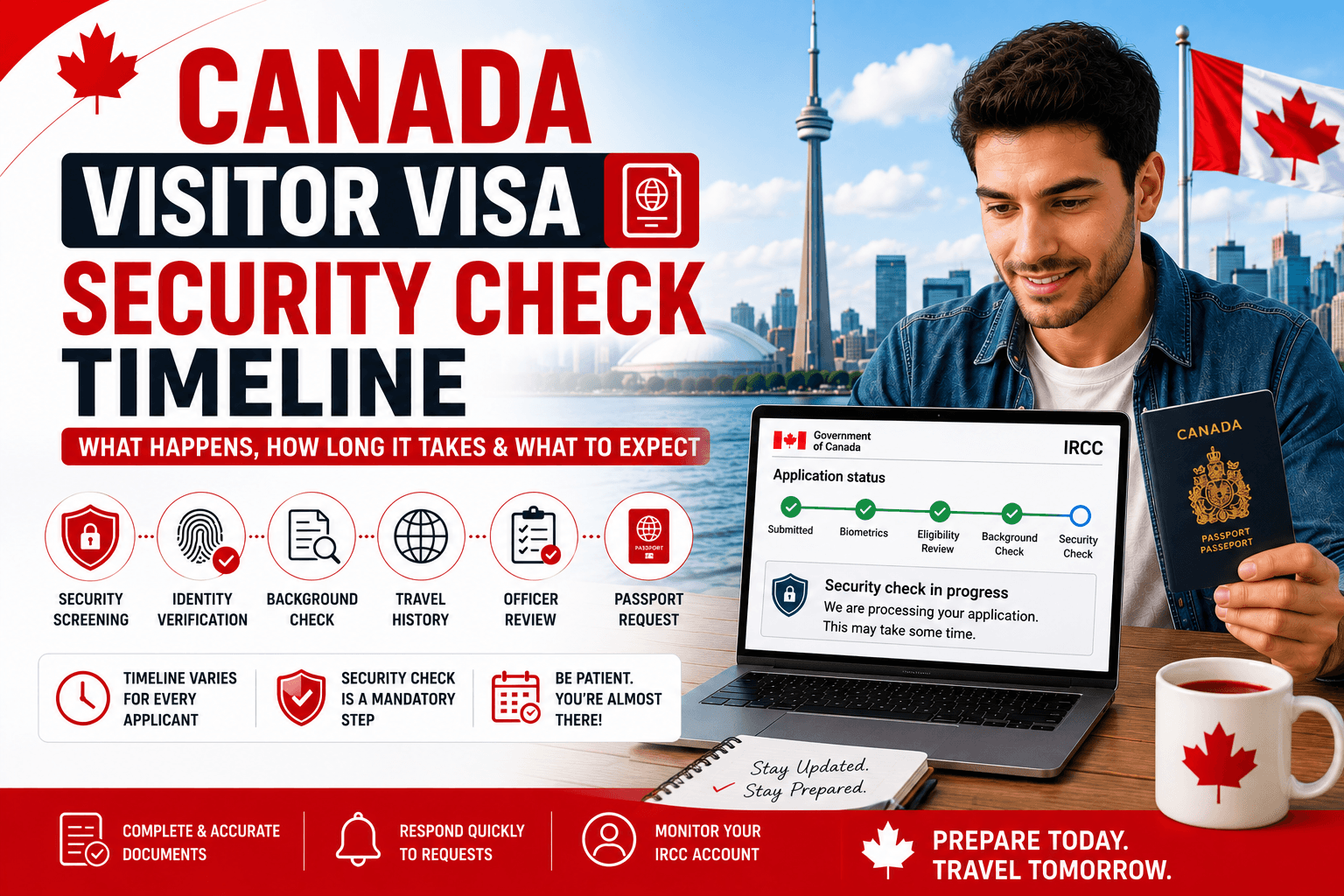
What Happens After Biometrics?
After completing your biometrics appointment, USCIS continues processing your application behind the scenes.
Typical post-biometric stages include:
- Eligibility review
- Medical examination review
- Background verification
- Security screening
- Interview scheduling (if required)
- Final decision
Completing biometrics only confirms your identity.
It does not indicate that your Green Card has been approved.
How to Track Your Green Card Application
USCIS allows applicants to monitor their case online using their receipt number.
Common status updates include:
- Case received
- Biometrics appointment scheduled
- Biometrics completed
- Request for Evidence issued
- Interview scheduled
- Interview completed
- Case approved
- Card being produced
- Card mailed
Case status updates may remain unchanged for several weeks while USCIS completes internal reviews.
What Happens After Approval?
Once your Green Card application is approved, USCIS begins producing your Permanent Resident Card.
Depending on your application pathway, you may receive:
- Approval notice
- Immigrant visa (for consular applicants)
- Permanent Resident Card (Green Card)
- Welcome notice
Before using your Green Card, carefully verify:
- Your name
- Date of birth
- Category
- Card validity
- Personal information
If you notice any errors, contact USCIS as soon as possible.
Frequently Asked Questions
How long does it take to get a US Green Card?
The timeline depends on your immigration category, visa availability, government workload, and whether additional review is required.
Does biometrics mean my Green Card is approved?
No.
Biometrics only verify your identity.
USCIS must still complete background checks, security screening, document review, and, where required, an interview before making a final decision.
What is a Priority Date?
Your priority date determines your place in line for immigrant visa availability in categories that are subject to annual limits.
Applicants generally cannot proceed until their priority date becomes current.
What is a Request for Evidence (RFE)?
An RFE is a formal request from USCIS asking for additional documentation before your application can continue.
Responding promptly helps avoid unnecessary delays.
Can I speed up my Green Card application?
Most applicants cannot request faster processing.
However, expedited processing may be available in limited situations where USCIS criteria are met.
Why hasn’t my case changed for several months?
This is common.
Many Green Card applications remain in the same status while background checks, visa availability, or internal reviews are completed.
Do all applicants attend an interview?
No.
Some applicants may have their interview waived, while others are required to attend an in-person interview depending on their immigration category and circumstances.
Can I work while waiting for my Green Card?
Some applicants may qualify for an Employment Authorization Document (EAD) while their Green Card application is pending.
Eligibility depends on the immigration category under which they applied.
Can I travel while my Green Card application is pending?
Travel rules vary depending on your immigration status and application type.
Some applicants may require Advance Parole before leaving the United States to avoid affecting their pending application.
Can a Green Card lead to U.S. citizenship?
Yes.
Many lawful permanent residents become eligible to apply for naturalization after meeting the required residency and eligibility requirements.
Final Thoughts
Obtaining a U.S. Green Card is a significant milestone, but the journey often requires patience. Unlike temporary visas, permanent residence applications involve several stages, including petition approval, visa availability, biometrics, medical examinations, background checks, and, in many cases, an interview before a final decision is made.
Although processing times vary depending on your immigration category and personal circumstances, submitting a complete and accurate application can help reduce avoidable delays. Carefully reviewing your supporting documents, responding quickly to Requests for Evidence, and attending every scheduled appointment are some of the most effective ways to keep your application moving.
It’s also important to remember that many delays occur because of factors outside an applicant’s control, such as annual visa quotas, government workload, and security screening. A long wait does not necessarily indicate that your application is at risk of being refused.
Stay informed, monitor your USCIS case status regularly, and keep your contact information up to date. With realistic expectations and thorough preparation, you’ll place yourself in the best possible position to receive your Green Card and begin your next chapter as a lawful permanent resident of the United States.