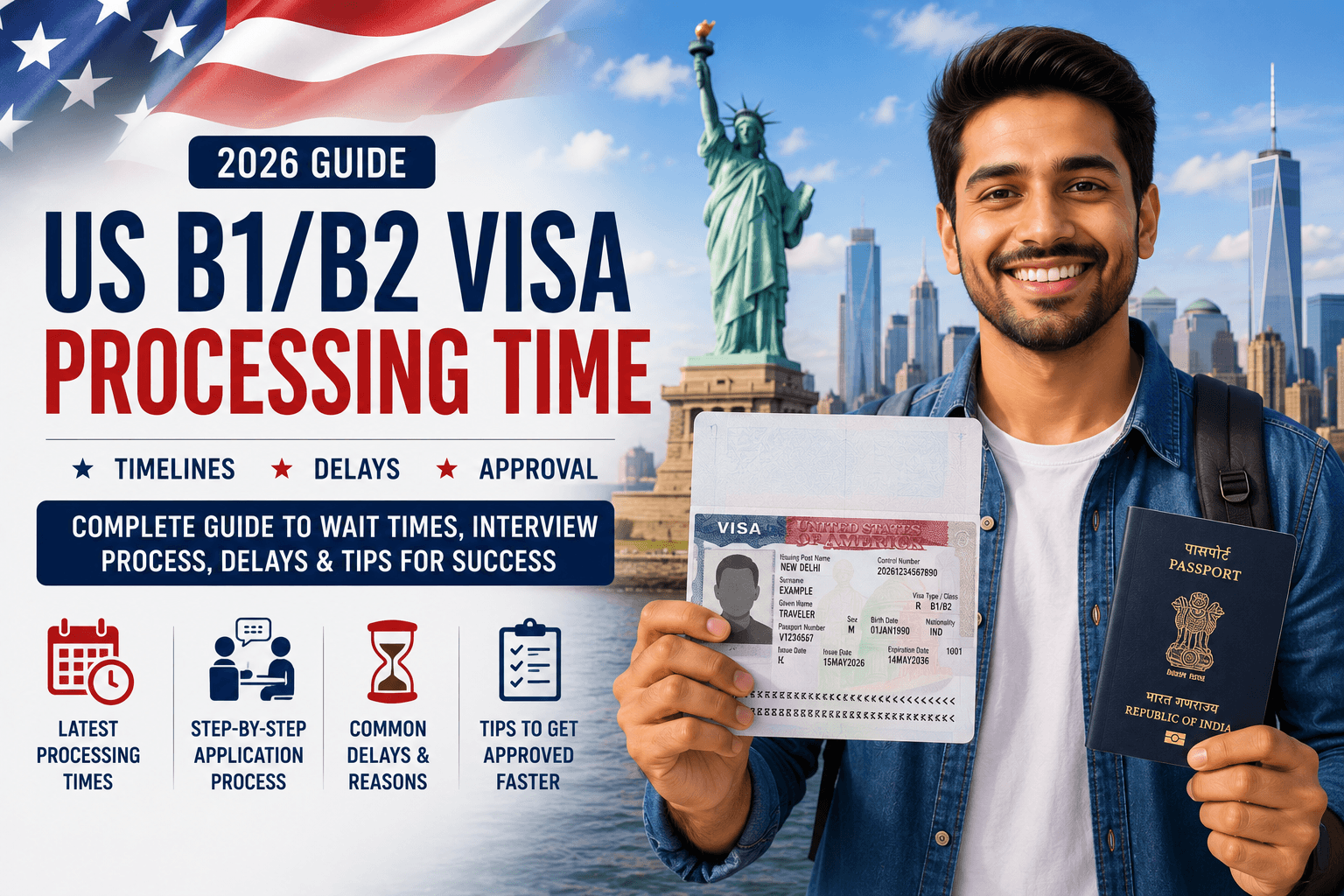
The B1/B2 Visa is one of the most commonly issued non-immigrant visas for the United States. Every year, millions of people apply for this visa to travel for tourism, business meetings, medical treatment, conferences, or to visit family and friends.
Before making travel plans, one of the first questions applicants ask is:
“How long does a US B1/B2 Visa take to process?”
The answer depends on several factors.
Unlike many other visas, the overall timeline includes more than just the embassy’s decision. Applicants often spend time completing the DS-160 form, paying visa fees, scheduling an interview, attending biometrics (where applicable), completing the consular interview, and waiting for passport return.
Processing times also vary significantly depending on the U.S. embassy or consulate where you apply. Appointment availability can range from a few weeks to several months, and the U.S. Department of State recommends checking wait times for your chosen embassy before making travel arrangements.
This guide explains every stage of the B1/B2 Visa process, what affects processing times, common reasons for delays, and practical tips to improve your chances of a smooth application.
What Is a US B1/B2 Visa?
The B1/B2 Visa combines two temporary visitor visa categories into one visa.
B1 Visa
The B1 category is intended for short-term business activities, including:
- Business meetings
- Conferences
- Contract negotiations
- Professional consultations
- Training (where permitted)
B2 Visa
The B2 category is generally used for:
- Tourism
- Visiting family and friends
- Medical treatment
- Vacations
- Social events
- Short recreational courses
The visa does not normally permit employment in the United States.
How Long Does US B1/B2 Visa Processing Take?
The overall timeline depends on several stages.
These include:
- Completing Form DS-160
- Paying the visa application fee
- Scheduling your interview
- Attending your interview
- Administrative processing (if required)
- Passport return
The largest source of delay for many applicants is securing an interview appointment, which varies by embassy or consulate and changes throughout the year. The U.S. Department of State updates appointment wait times regularly.
How the US B1/B2 Visa Process Works
Most visitor visa applications follow the same general process.
Step 1: Complete Form DS-160
The first step is completing the online DS-160 Nonimmigrant Visa Application.
You’ll provide information about:
- Personal details
- Passport
- Employment
- Education
- Travel plans
- Previous travel
- Security questions
Accuracy is extremely important.
Step 2: Pay the Visa Fee
After submitting the DS-160, pay the required visa application fee according to the procedures used by your local U.S. embassy or consulate.
Keep your payment receipt for scheduling your appointment.
Step 3: Schedule Your Visa Interview
Most applicants between certain age ranges are required to attend an interview.
Appointment availability depends on:
- Embassy workload
- Country of application
- Seasonal demand
- Staffing levels
Some embassies have much shorter waiting periods than others. The Department of State publishes location-specific wait times to help applicants plan ahead.
Step 4: Attend Biometrics (Where Required)
Depending on the embassy or application process, your fingerprints and photograph may be collected before or during your visa appointment.
These biometric details are used to verify your identity.
Providing biometrics does not indicate visa approval.
Step 5: Attend Your Consular Interview
During the interview, a consular officer evaluates whether you qualify for a B1/B2 Visa.
Questions commonly cover:
- Purpose of travel
- Employment
- Family ties
- Financial situation
- Previous international travel
- Plans to return home
Answer honestly and confidently.
Step 6: Administrative Processing (If Required)
Some applications require additional administrative processing after the interview.
This may involve:
- Background verification
- Security checks
- Additional document review
- Identity verification
Administrative processing timelines vary considerably depending on the individual case.
Step 7: Passport Return
If your visa is approved, your passport is normally returned after visa printing.
For many straightforward cases, passports are returned within several business days after approval, although this varies by location and courier arrangements.
Factors That Affect US B1/B2 Visa Processing Time
Several factors influence how long your application takes.
Embassy Appointment Availability
Interview appointment availability is often the single biggest factor affecting the total timeline.
Wait times differ significantly between embassies and consulates and can change frequently based on demand and staffing.
Seasonal Demand
Applications often increase during:
- Summer holidays
- Christmas and New Year
- School vacations
- Major international events
Higher demand usually results in longer appointment wait times.
Administrative Processing
Not every application receives an immediate decision after the interview.
If additional administrative processing is required, the overall timeline may increase.
Supporting Documents
Incomplete documentation can delay a decision if additional evidence is requested.
Typical documents include:
- Valid passport
- DS-160 confirmation page
- Appointment confirmation
- Photograph (where required)
- Financial evidence
- Employment documents
- Invitation letter (if applicable)
- Travel itinerary
Previous Immigration History
Previous U.S. visas, immigration history, and international travel may also influence the overall review process.
How to Improve Your Chances of Faster Processing
Although applicants cannot control embassy appointment availability, several best practices can help reduce avoidable delays.
Apply Early
Submit your application several months before your intended travel date.
This is particularly important during busy travel seasons.
Complete the DS-160 Carefully
Review every answer before submitting your form.
Mistakes can delay your application or create inconsistencies during the interview.
Organize Your Supporting Documents
Bring every required document in an organized folder.
Well-prepared applicants often experience smoother interviews.
Be Honest During Your Interview
Answer every question truthfully.
Attempting to conceal information can lead to refusal and future immigration complications.
Demonstrate Strong Ties to Your Home Country
The consular officer must be satisfied that you intend to leave the United States after your temporary visit.
Evidence may include:
- Employment
- Business ownership
- Family responsibilities
- Property ownership
- Ongoing education
- Financial commitments
Strong home-country ties can strengthen your application.
If you’re considering long-term immigration instead of temporary travel, our US Green Card Processing Time guide explains how permanent residence applications differ from B1/B2 visitor visas.
US B1/B2 Visa Processing Time After the Interview
The visa interview is one of the most important stages of the B1/B2 visa application process. Many applicants expect to receive a final decision immediately after speaking with the consular officer, but that is not always the case.
Some applicants are informed that their visa has been approved during the interview, while others may be asked to provide additional documents or undergo administrative processing before a final decision is made.
After your interview, your application generally moves through one of the following paths:
- Visa approved
- Administrative processing
- Additional document request
- Visa refused under U.S. immigration law
The amount of time required after the interview depends on your individual circumstances.
What Is Administrative Processing?
Administrative processing is an additional review that some visa applications require before a final decision can be made.
It does not automatically mean your visa will be refused.
Administrative processing may involve:
- Identity verification
- Security screening
- Background checks
- Employment verification
- Document verification
- Review by additional government agencies
Some cases are completed relatively quickly, while others require considerably more time depending on the complexity of the review.
Why Is My US B1/B2 Visa Taking So Long?
There are several legitimate reasons why a visitor visa application may take longer than expected.
Embassy Workload
Each U.S. embassy or consulate processes a different number of applications.
Embassies experiencing higher demand may require more time to:
- Schedule interviews
- Review applications
- Print visas
- Return passports
Processing times vary throughout the year.
Administrative Processing
One of the most common reasons for delays is administrative processing after the interview.
Applicants cannot speed up this review.
The U.S. embassy will normally contact you if additional information is required.
Additional Document Requests
Sometimes the consular officer requests further documentation before making a final decision.
Examples include:
- Updated passport
- Employment verification
- Financial documents
- Invitation letter
- Business documents
- Travel itinerary
- Proof of family ties
Processing usually resumes after the requested documents have been received and reviewed.
Background Verification
Consular officers may verify information relating to:
- Employment
- Previous travel
- Immigration history
- Identity
- Supporting documents
Applications requiring additional verification generally take longer.
Security Screening
Every applicant undergoes security screening before a visa can be issued.
Applicants cannot influence this stage.
How to Avoid US B1/B2 Visa Processing Delays
Although some delays are outside your control, careful preparation can improve your application.
Apply Well Before Your Trip
Do not wait until the last minute before your intended travel date.
Applying several months in advance provides extra time if administrative processing becomes necessary.
Complete the DS-160 Carefully
Ensure every answer on your DS-160 form is accurate and consistent with your supporting documents.
Small mistakes may create unnecessary questions during the interview.
Bring Complete Supporting Documents
Typical documents include:
- Passport
- DS-160 confirmation page
- Appointment confirmation
- Visa fee receipt
- Financial documents
- Employment letter
- Invitation letter (if applicable)
- Travel itinerary
Being well prepared helps your interview proceed more smoothly.
Demonstrate Strong Ties to Your Home Country
One of the most important parts of a successful B1/B2 application is showing that you intend to return home after your temporary visit.
Examples include:
- Permanent employment
- Business ownership
- Family responsibilities
- Property ownership
- Ongoing education
- Financial commitments
Answer Interview Questions Honestly
Always answer the consular officer’s questions truthfully and directly.
Providing false information can lead to visa refusal and future immigration consequences.
How to Track Your US B1/B2 Visa Application
After your interview, you can monitor your visa application status online using the U.S. Department of State’s Consular Electronic Application Center (CEAC).
Common status updates include:
- Application Received
- Refused (temporary or final, depending on the circumstances)
- Administrative Processing
- Approved
- Issued
A status may remain unchanged for several days or weeks while your application is being reviewed.
What Happens After Approval?
If your visa is approved, your passport will be retained temporarily for visa printing.
Once completed, your passport is returned according to the collection or courier option selected during your application.
Before travelling, carefully check:
- Your name
- Passport number
- Visa type
- Visa validity dates
- Number of permitted entries
If you notice any errors, contact the issuing embassy or consulate immediately.
Frequently Asked Questions
How long does a US B1/B2 Visa take?
The total timeline depends on interview appointment availability, the visa interview, administrative processing (if required), and passport return.
Does administrative processing mean my visa has been refused?
No.
Administrative processing simply means additional review is required before a final decision can be made.
Can I speed up administrative processing?
Generally, no.
Applicants usually cannot request faster administrative processing unless special circumstances qualify under embassy policies.
Why is my passport still with the embassy?
If your application has been approved or is undergoing additional review, the embassy may temporarily retain your passport until processing is complete.
Can I buy my flight before receiving my visa?
It is generally advisable to wait until your visa has been issued before purchasing non-refundable airline tickets.
What if my visa is refused?
The consular officer will explain the legal basis for the refusal.
Depending on the circumstances, you may be eligible to submit a new application in the future.
How long is a B1/B2 Visa valid?
Visa validity varies depending on your nationality and reciprocity agreements between the United States and your home country.
Can I work on a B1/B2 Visa?
No.
The B1/B2 Visa does not normally authorize employment in the United States.
Can I extend my stay?
In some circumstances, visitors may apply for an extension while legally present in the United States.
Approval is not guaranteed and depends on U.S. immigration laws.
Can a B1/B2 Visa lead to a Green Card?
A B1/B2 Visa is a temporary non-immigrant visa and is not intended as a direct pathway to permanent residence. If your long-term goal is U.S. permanent residency, our US Green Card Processing Time guide explains the Green Card process and expected timelines.
Final Thoughts
The US B1/B2 Visa remains one of the most popular options for temporary travel to the United States, whether your purpose is tourism, business, medical treatment, or visiting family and friends. Although many applicants receive their visas without difficulty, the overall timeline depends on several stages, including interview availability, document review, administrative processing, and passport issuance.
The strongest applications are built on accurate information, complete supporting documents, and clear evidence that the visit is temporary. Demonstrating strong ties to your home country and answering interview questions honestly can significantly improve your chances of approval.
Remember that administrative processing and background checks are a normal part of the immigration process for some applicants. A delay does not automatically indicate a refusal.
Apply well in advance of your intended travel date, monitor your application status regularly, and avoid making irreversible travel arrangements until your passport has been returned with your visa. With careful preparation and realistic expectations, you’ll maximize your chances of a smooth and successful B1/B2 visa application.