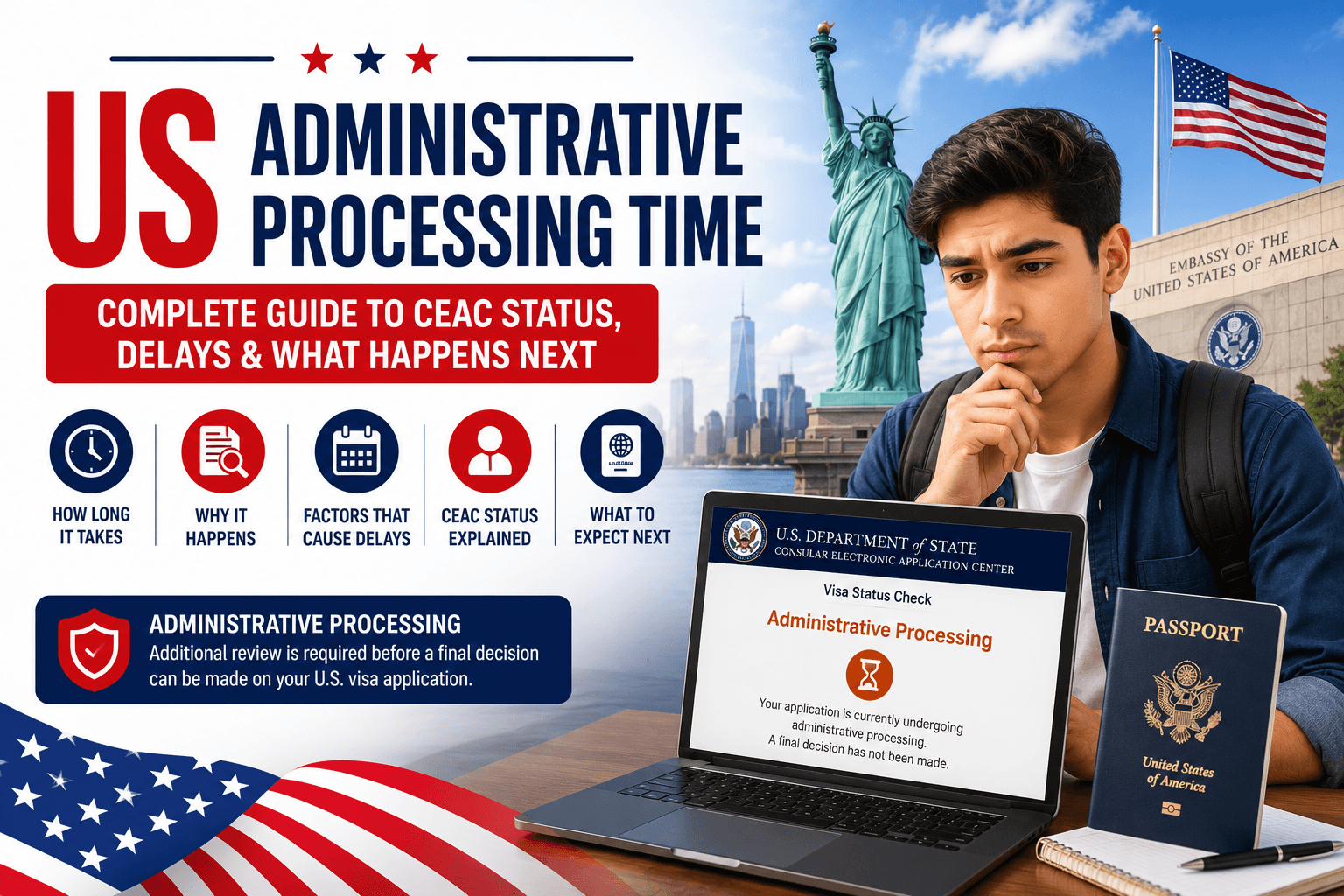
Receiving a notice that your U.S. visa application is in Administrative Processing can be worrying, especially if you’ve already completed your embassy interview and expected to receive your passport quickly.
Many applicants immediately wonder whether something has gone wrong with their application.


One of the most common questions people ask is:
“How long does U.S. Administrative Processing take?”
The answer varies from one applicant to another.
Administrative Processing is an additional stage of review that some visa applications undergo before a final decision is made. While some cases are completed relatively quickly, others may take longer depending on the type of checks being performed and the individual circumstances of the applicant.
Being placed into Administrative Processing does not automatically mean your visa will be refused.
This guide explains what Administrative Processing is, why it happens, what occurs during this stage, the factors that affect processing time, and what you should expect while waiting for a final decision.
What Is U.S. Administrative Processing?
Administrative Processing is an internal review conducted after a U.S. visa interview when additional checks or verification are required before a final decision can be made.
It can apply to many types of visas, including:
- F-1 Student Visa
- B1/B2 Visitor Visa
- H-1B Work Visa
- J-1 Exchange Visitor Visa
- Immigrant Visas
- Family-sponsored visas
- Employment-based visas
Every Administrative Processing case is different.
Some applications require only routine verification, while others involve more extensive reviews.
Does Administrative Processing Mean My Visa Is Refused?
No.
Administrative Processing is not the same as a refusal.
It simply means the embassy or consulate cannot issue a final decision until additional internal processing has been completed.
Many applicants who enter Administrative Processing later receive visa approval.
Why Is My Visa in Administrative Processing?
Several reasons may result in Administrative Processing.
Common examples include:
- Security screening
- Identity verification
- Background investigations
- Document verification
- Technology-related reviews
- Employment verification
- Educational verification
- Previous immigration history
- Name checks
- Additional internal reviews
The exact reason is not always shared with the applicant.
What Happens During Administrative Processing?
Although every case is different, Administrative Processing generally follows several stages.
Step 1: Embassy Review
After your visa interview, the consular officer determines that additional review is required.
Your application is placed into Administrative Processing while further assessments are completed.
Step 2: Identity Verification
Government systems verify your identity using information such as:
- Passport details
- Biographic information
- Biometrics
- Previous immigration records
Step 3: Background Checks
Additional background screening may include reviewing:
- Travel history
- Employment history
- Immigration history
- Previous visa applications
- Security databases
Not every applicant undergoes the same level of review.
Step 4: Document Verification
The embassy or consulate may verify documents submitted with your application.
Examples include:
- Employment letters
- University admission documents
- Financial records
- Sponsorship documents
- Civil documents
If clarification is required, you may be contacted to provide additional information.
Step 5: Final Review
Once all required checks have been completed, a consular officer reviews the application again.
The officer determines whether the visa can now be approved or whether additional action is required.
Step 6: Visa Issuance
If approved, your passport is prepared for visa printing.
After quality checks have been completed, your passport is returned through the designated pickup or courier service.
Factors That Affect Administrative Processing Time
Several factors influence how long Administrative Processing may take.
Type of Visa
Different visa categories involve different review procedures.
For example:
- Student visas
- Visitor visas
- Employment visas
- Immigrant visas
Each category may require different verification steps.
Security Screening
Applications requiring additional security screening may remain under review longer.
Applicants cannot influence this process.
Background Verification
Applicants with extensive international travel, multiple previous visas, or complex immigration histories may require additional background verification.
Document Verification
If documents must be verified with employers, universities, sponsors, or government agencies, processing may take longer.
Additional Document Requests
If the embassy requests updated documents after the interview, processing generally pauses until those documents have been received and reviewed.
Embassy Workload
Periods of high visa demand may increase overall processing times because consular officers are handling a larger number of applications.
How to Improve Your Chances of Faster Processing
Although applicants cannot control Administrative Processing, careful preparation can reduce avoidable delays.
Submit Complete Documentation
Ensure all required documents are accurate, complete, and consistent before attending your visa interview.
Answer Interview Questions Honestly
Provide truthful and consistent answers throughout your interview.
Conflicting information may result in additional review.
Respond Quickly to Embassy Requests
If the embassy requests further documents, submit them as soon as possible.
Prompt responses help your application continue moving through the review process.
Monitor Your Case Status
Check your application status regularly using the CEAC visa status system to monitor updates while your application is under review.
If you’re applying for a U.S. student visa, our US F-1 Visa Processing Time After Interview guide explains the stages that follow the interview. You may also find our US B1/B2 Visa Processing Time and US Immigrant Visa Processing Time guides helpful for understanding other U.S. visa timelines.
Why Is My U.S. Administrative Processing Taking So Long?
Waiting while your visa application remains in Administrative Processing can be frustrating, especially if you have travel plans, a university start date, or a job offer.
However, a longer processing time does not automatically mean your visa will be refused.
Administrative Processing simply means additional reviews must be completed before the U.S. Embassy or Consulate can make a final decision.
Below are the most common reasons why Administrative Processing may take longer.
Security Screening
One of the most common reasons for Administrative Processing is additional security screening.
This review may involve:
- Identity verification
- Security database checks
- Government agency reviews
- National security assessments
Applicants cannot speed up this stage, as it is handled internally by U.S. government agencies.
Background Verification
Your application may undergo additional background verification.
This can include reviewing:
- Previous travel history
- Immigration history
- Employment records
- Educational background
- Previous U.S. visa applications
Applicants with extensive international travel or complex immigration histories may experience longer review times.
Document Verification
The embassy may verify documents submitted with your application.
Examples include:
- Employment letters
- University admission documents
- Financial records
- Sponsorship documents
- Civil documents
- Business registration records
If verification with third parties is required, processing may take additional time.
Name Checks
Some applicants require additional name checks to distinguish them from individuals with similar names appearing in government databases.
This process is completed internally and may increase processing time.
Technology Alert List (TAL) Reviews
Applicants working or studying in certain specialized scientific, engineering, or technology fields may undergo additional reviews.
These checks help determine whether export-control or national security regulations apply.
Not every applicant is subject to this review.
Additional Document Requests
The embassy may request further documentation before making a final decision.
Common requests include:
- Updated passport
- New financial documents
- Employment verification
- Academic records
- Police certificates
- Additional forms
- Revised supporting documents
Processing usually resumes once the requested documents have been received and reviewed.
High Application Volume
Embassies often receive a high number of visa applications during peak travel seasons.
Periods of increased demand include:
- Summer travel
- University admissions
- Holiday seasons
- Business conference periods
Higher workloads may contribute to longer Administrative Processing times.
How to Avoid Unnecessary Delays
Although applicants cannot control Administrative Processing itself, careful preparation can reduce avoidable delays.
Submit Complete Documentation
Provide every required document before or during your interview.
Incomplete applications often require additional review.
Keep Your Information Consistent
Ensure your:
- DS-160 form
- Passport
- Supporting documents
- Interview answers
all contain accurate and consistent information.
Respond Quickly to Embassy Requests
If the embassy asks for additional information, submit the requested documents as soon as possible.
Prompt responses help your application continue moving through processing.
Monitor Your CEAC Status
Check your application status regularly using the Consular Electronic Application Center (CEAC).
Status updates may change as your application progresses.
Understanding CEAC Status Updates
Many applicants become concerned when they see different status messages in the CEAC system.
Here are the most common ones.
Application Received
The embassy has received your application and it is awaiting review or further processing.
Administrative Processing
Your application requires additional internal review before a final decision can be made.
This does not automatically mean refusal.
Approved
Your visa has been approved.
The embassy will normally begin preparing your passport for visa printing.
Issued
Your visa has been printed and your passport is being prepared for collection or courier delivery.
Refused
A refusal status means the visa has not been issued.
Depending on the circumstances, the refusal may be temporary or final. The embassy will normally provide information explaining the decision.
What Happens After Administrative Processing Is Complete?
Once Administrative Processing has been completed, the embassy makes a final decision.
If approved, the remaining steps generally include:
- Visa printing
- Quality assurance checks
- Passport packaging
- Courier dispatch or pickup notification
Applicants should carefully review the visa after receiving their passport to ensure all information is correct.
Frequently Asked Questions
How long does U.S. Administrative Processing take?
The timeline varies depending on the type of visa, security checks, document verification, embassy workload, and individual circumstances.
Does Administrative Processing mean my visa is refused?
No.
Administrative Processing simply means additional review is required before a final decision can be made.
Can Administrative Processing end with visa approval?
Yes.
Many applicants receive visa approval after Administrative Processing has been completed.
Can I speed up Administrative Processing?
Generally, no.
Applicants cannot request expedited Administrative Processing, although responding quickly to embassy requests can help avoid unnecessary delays.
Will the embassy contact me if more documents are required?
Yes.
If additional information is needed, the embassy will normally contact you using the details provided in your application.
Can I travel while my passport is at the embassy?
No.
If the embassy has retained your passport, you must wait until it has been returned before travelling internationally.
What does “Issued” mean?
“Issued” means your visa has been approved, printed, and your passport is being prepared for return.
Can Administrative Processing happen for any visa type?
Yes.
Administrative Processing may occur for student, visitor, work, exchange, immigrant, and family-based visas.
Should I contact the embassy while waiting?
Unless the embassy has requested additional information or your case has significantly exceeded normal processing expectations, it’s generally advisable to wait for further updates before making an inquiry.
What should I do after receiving my passport?
Carefully verify:
- Your name
- Passport number
- Visa category
- Visa validity dates
- Number of entries
If you notice any errors, contact the embassy or consulate immediately.
Final Thoughts
Administrative Processing is a normal part of the U.S. visa system for some applicants. While the additional waiting period can be frustrating, it does not automatically indicate that your application will be refused. In many cases, it simply reflects the need for additional security checks, background verification, document review, or other internal procedures.
The best way to minimize avoidable delays is to submit a complete application, provide accurate and consistent information, attend your interview fully prepared, and respond promptly to any requests from the embassy.
Although processing times vary from one case to another, patience and careful preparation remain the best approach while waiting for your final visa decision.