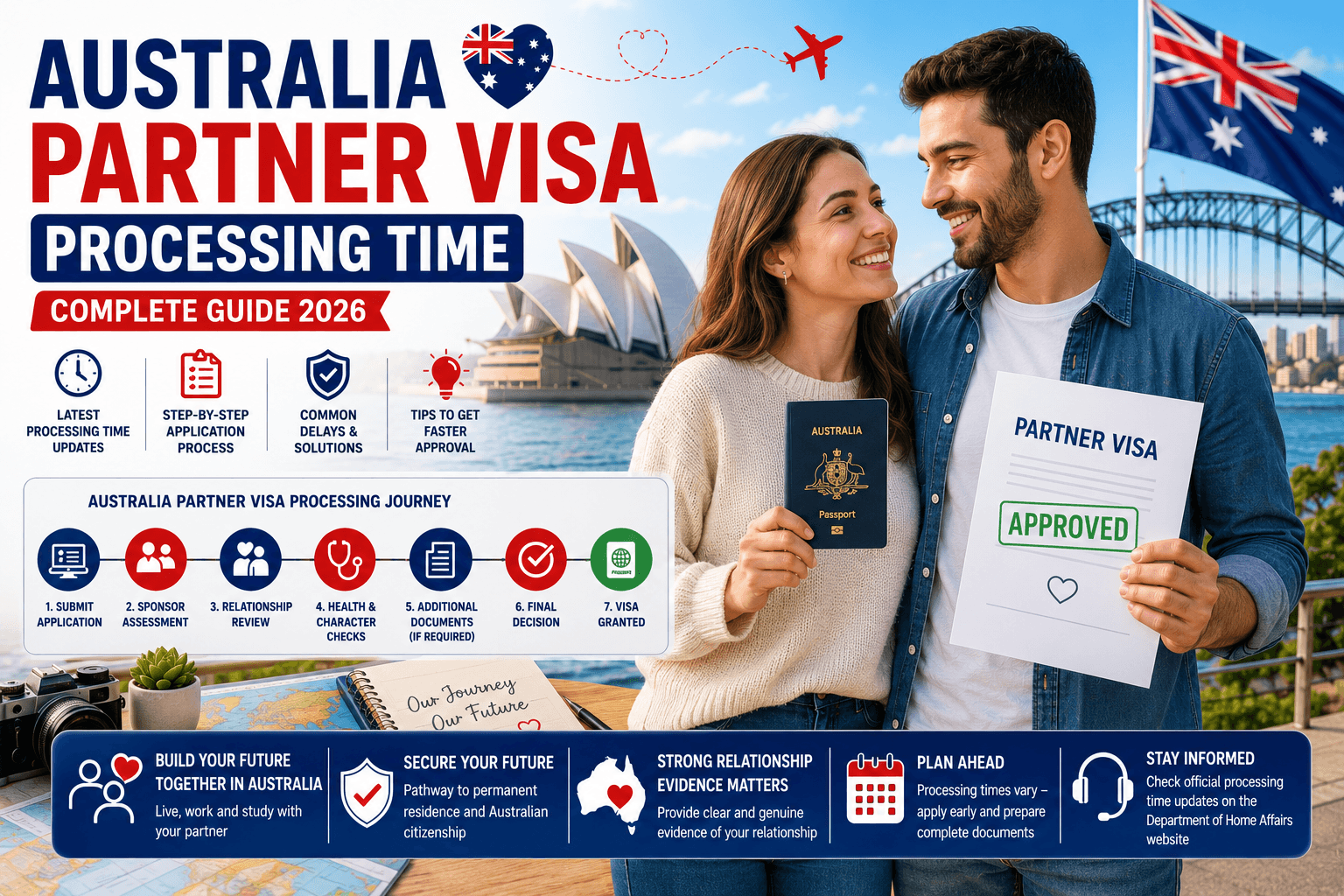
Australia is a popular destination for couples who wish to build their lives together. If your spouse or de facto partner is an Australian citizen, Australian permanent resident, or eligible New Zealand citizen, you may be able to apply for an Australia Partner Visa.
One of the most common questions applicants ask is:
“How long does an Australia Partner Visa take to process?”
The answer depends on several factors, including the type of Partner Visa you apply for, the completeness of your application, relationship evidence, health and character checks, and the current workload of the Australian Department of Home Affairs.
Some applications are finalized sooner than others, while more complex cases may require additional review before a decision is made.
This guide explains how Australia Partner Visa processing works, the stages of the application, common reasons for delays, and practical tips to help your application move as smoothly as possible.
What Is an Australia Partner Visa?
An Australia Partner Visa allows the spouse or eligible de facto partner of an Australian citizen, Australian permanent resident, or eligible New Zealand citizen to live in Australia.
Depending on your circumstances, you may apply for:
- Onshore Partner Visa
- Offshore Partner Visa
- Temporary Partner Visa
- Permanent Partner Visa
Many applicants first receive a temporary partner visa before becoming eligible for permanent residence if they continue to meet the requirements.
Who Can Apply?
To qualify for a Partner Visa, applicants generally need to demonstrate:
- A genuine and continuing relationship
- Sponsorship by an eligible partner
- A valid passport
- Compliance with health requirements
- Compliance with character requirements
- Supporting evidence of the relationship
Each application is assessed individually based on the evidence provided.
Australia Partner Visa Application Process
Understanding each stage of the process helps you know what to expect after submitting your application.
Step 1: Confirm Your Eligibility
Before applying, ensure that both you and your sponsoring partner meet the eligibility requirements for the appropriate Partner Visa.
Step 2: Gather Supporting Documents
Relationship evidence is one of the most important parts of the application.
Applicants commonly provide:
- Valid passports
- Marriage certificate (if married)
- Evidence of de facto relationship (where applicable)
- Joint financial documents
- Joint residential evidence
- Photographs together
- Communication records
- Statements from family and friends
- Identity documents
- Additional supporting evidence
Providing strong and organized documentation helps support your application.
Step 3: Submit Your Online Application
Applications are generally submitted online through the Australian Department of Home Affairs.
You’ll complete the required forms, upload supporting documents, and pay the applicable visa fee.
Step 4: Sponsor Application
Your partner may also need to submit sponsorship information and supporting documents as part of the overall application process.
Step 5: Health and Character Checks
Depending on your circumstances, you may be asked to complete:
- Immigration medical examination
- Chest X-ray
- Police clearance certificates
- Additional health documentation
These checks help determine whether you meet Australia’s immigration requirements.
Step 6: Relationship Assessment
An immigration officer carefully reviews your relationship evidence.
The assessment may include:
- Length of relationship
- Financial arrangements
- Living arrangements
- Social recognition of the relationship
- Future plans together
- Supporting documents
The officer must be satisfied that the relationship is genuine and continuing.
Step 7: Additional Information Request
If more information is required, the Department of Home Affairs may request:
- Additional relationship evidence
- Updated identity documents
- Financial records
- Police certificates
- Medical information
- Further written statements
Responding promptly helps avoid unnecessary delays.
Step 8: Final Decision
Once all assessments have been completed, the Department of Home Affairs makes a final decision.
If approved, you’ll receive notification of your Partner Visa and any conditions that apply.
Factors That Affect Australia Partner Visa Processing Time
Several factors influence how long a Partner Visa application may take.
Relationship Evidence
Applications supported by strong and consistent evidence are generally easier to assess.
Application Completeness
Incomplete applications often require additional information, which can increase processing time.
Health Requirements
Medical examinations or additional health assessments may extend processing.
Character Verification
Police certificates and character checks can also affect overall processing time.
Additional Relationship Verification
Some applications require further assessment of the relationship evidence before a decision can be made.
Application Volume
Partner Visa applications are received throughout the year, and higher application volumes may increase processing times.
How to Reduce Delays
Although you cannot control the Department of Home Affairs’ internal processing, you can reduce avoidable delays by:
- Submitting a complete application
- Providing strong relationship evidence
- Uploading clear and readable documents
- Completing medical examinations promptly
- Submitting police certificates when requested
- Responding quickly to requests for additional information
- Monitoring your application regularly
Preparing a thorough application from the beginning gives you the best chance of a smoother assessment.
Why Is My Australia Partner Visa Taking Longer Than Expected?
Many applicants become anxious when their Australia Partner Visa application takes longer than expected. In most cases, a longer processing time does not mean your application will be refused.
Partner Visa applications are among the most detailed visa applications processed by the Australian Department of Home Affairs. Every application is assessed individually, and some require additional verification before a final decision can be made.
Incomplete Relationship Evidence
One of the most common reasons for delays is insufficient or incomplete relationship evidence.
Examples include:
- Limited photographs together
- Missing joint financial records
- Little evidence of living together
- Missing communication records
- Incomplete personal statements
- Weak evidence of a genuine relationship
Providing comprehensive relationship evidence from the beginning helps reduce unnecessary delays.
Sponsor Verification
The Department of Home Affairs also assesses the sponsoring partner.
This may include verifying:
- Australian citizenship or permanent residency
- Sponsorship eligibility
- Previous sponsorship history
- Identity documents
- Relationship history
Additional verification of the sponsor may increase processing time.
Health Requirements
Most applicants are required to complete immigration health examinations.
These may include:
- Medical examination
- Chest X-ray
- Additional medical reports
If further medical information is required, your application may remain under review until all results have been assessed.
Character Checks
Australia requires Partner Visa applicants to satisfy character requirements.
You may be asked to provide:
- Police clearance certificates
- Additional character documentation
- Explanations relating to previous criminal or immigration matters (where applicable)
Character assessments may increase the overall processing time.
Relationship Assessment
One of the longest stages of Partner Visa processing is the relationship assessment.
Immigration officers may carefully review:
- Financial arrangements
- Nature of the household
- Social recognition of the relationship
- Commitment to each other
- Future plans together
- Supporting documents
Applications requiring further assessment naturally take longer than straightforward cases.
Additional Information Requests
The Department of Home Affairs may request further documents during processing.
Common requests include:
- Updated relationship evidence
- Additional photographs
- New joint financial documents
- Updated police certificates
- Medical information
- Identity documents
- Statutory declarations
Responding promptly helps your application continue moving through the assessment process.
High Application Volume
Partner Visa applications are submitted throughout the year.
Periods of higher application volumes may increase overall processing times, particularly for applications requiring detailed assessment.
What Should You Do While Waiting?
Although you cannot speed up the Department of Home Affairs’ internal review process, there are several practical steps you can take while waiting.
Monitor Your Application
Log in to your ImmiAccount regularly to check for updates or requests for additional information.
Respond Quickly
If more documents are requested, submit them as soon as possible.
Prompt responses help prevent avoidable delays.
Keep Your Documents Current
Ensure important documents remain valid throughout processing, including:
- Passport
- Police certificates
- Relationship evidence
- Medical documents
If updated documents are requested, provide them promptly.
Continue Collecting Relationship Evidence
Even after submitting your application, continue keeping records that demonstrate your ongoing relationship.
Examples include:
- Recent photographs together
- Joint financial records
- Travel records
- Communication history
- Utility bills
- Lease agreements
These documents may be useful if additional evidence is requested.
What Happens After Approval?
If your Partner Visa is approved, you’ll receive an official notification explaining:
- Your visa grant
- Visa conditions
- Date of effect
- Travel rights
- Next steps toward permanent residence (where applicable)
Carefully review your visa grant notification and keep a copy for your records.
Frequently Asked Questions
How long does an Australia Partner Visa take to process?
Processing times vary depending on the visa subclass, relationship assessment, health and character checks, application completeness, and the Department of Home Affairs’ workload.
Why is my Partner Visa taking so long?
Common reasons include:
- Relationship verification
- Sponsor verification
- Medical examinations
- Character checks
- Additional document requests
- High application volumes
Can I speed up my Partner Visa application?
Generally, no.
The best way to reduce delays is to submit a complete application with strong relationship evidence and respond quickly to any requests from the Department of Home Affairs.
What evidence is most important?
Strong evidence usually includes:
- Joint finances
- Living arrangements
- Shared responsibilities
- Social recognition
- Commitment to the relationship
The more comprehensive and consistent your evidence, the stronger your application.
Will I be interviewed?
Some applicants may be asked to attend an interview or provide additional information if the Department of Home Affairs requires further clarification.
Can I work while my Partner Visa is being processed?
Work rights depend on your visa type and individual circumstances. Check the conditions attached to your current visa or bridging visa if you are applying from within Australia.
What happens if my application is refused?
The Department of Home Affairs will explain the reasons for refusal. Depending on your circumstances, you may have options such as applying again or seeking a review, if eligible.
Do both partners need police certificates?
Depending on the circumstances, the applicant is commonly required to provide police certificates. Additional documents may also be requested during processing.
Can I include dependent children?
Yes. Eligible dependent children may be included in some Partner Visa applications, provided they meet the relevant immigration requirements.
Can I apply if we are not married?
Yes. Eligible de facto partners may qualify if they can provide sufficient evidence that their relationship meets Australia’s legal requirements.
Final Thoughts
Australia’s Partner Visa program allows couples to build their future together, but the application process requires detailed evidence and careful assessment. Because every relationship is unique, processing times can vary significantly depending on the strength of your application and the level of verification required.
Submitting a complete application with comprehensive relationship evidence, responding promptly to requests from the Department of Home Affairs, and ensuring your health and character requirements are met will give your application the best chance of progressing smoothly. Patience and thorough preparation are key to a successful Partner Visa application.